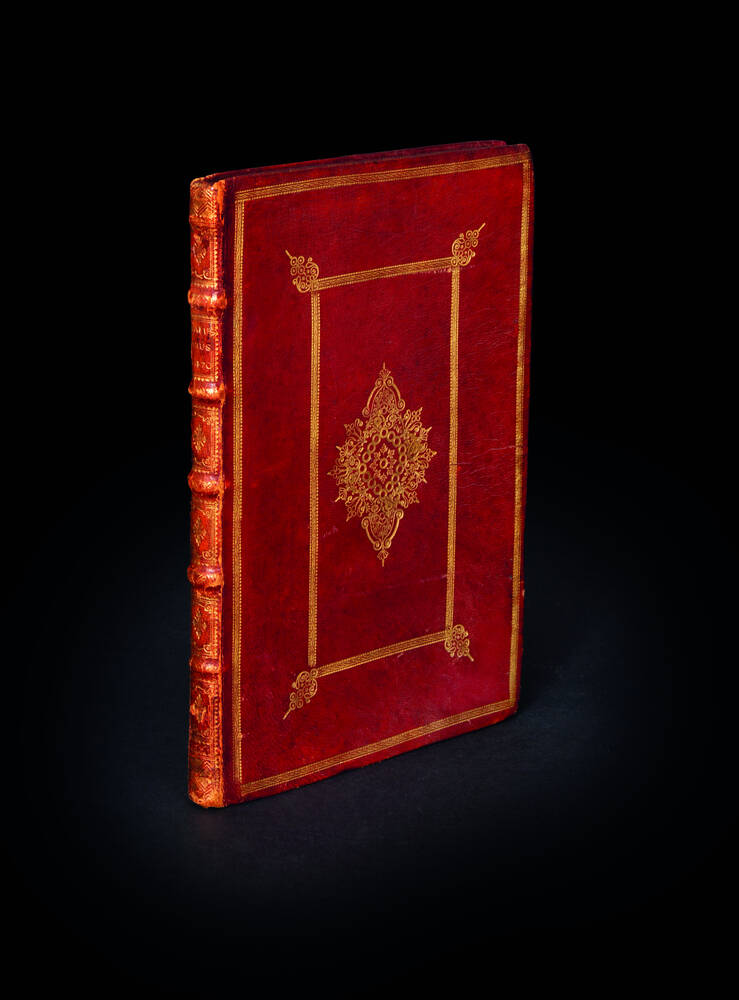
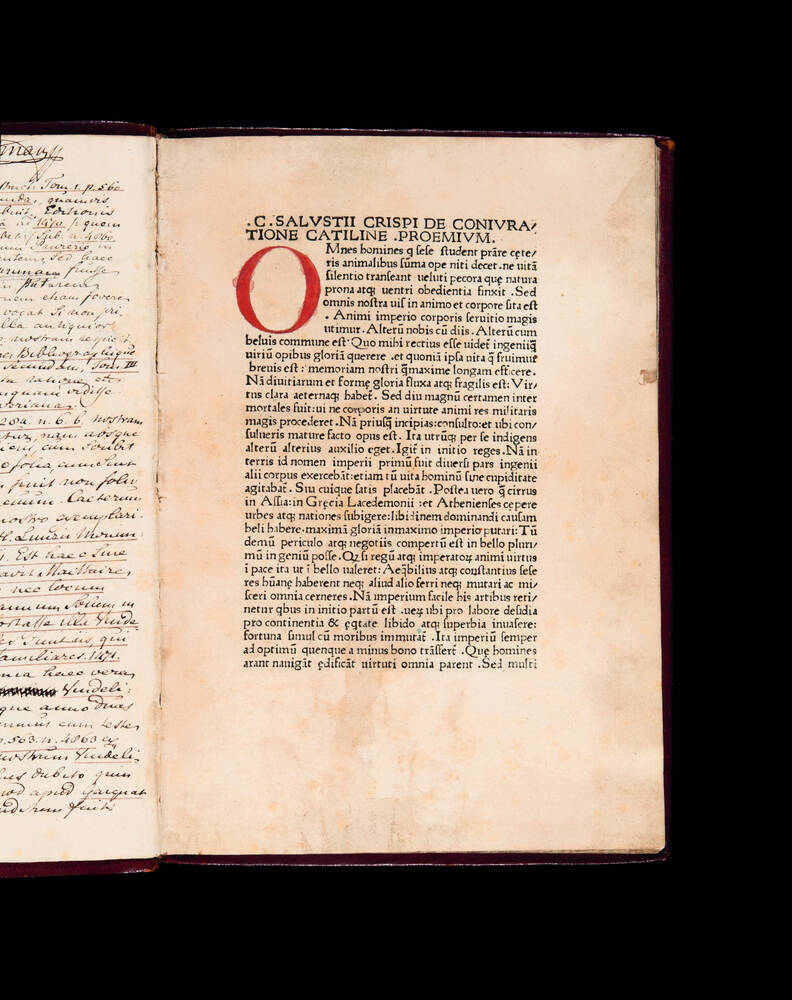
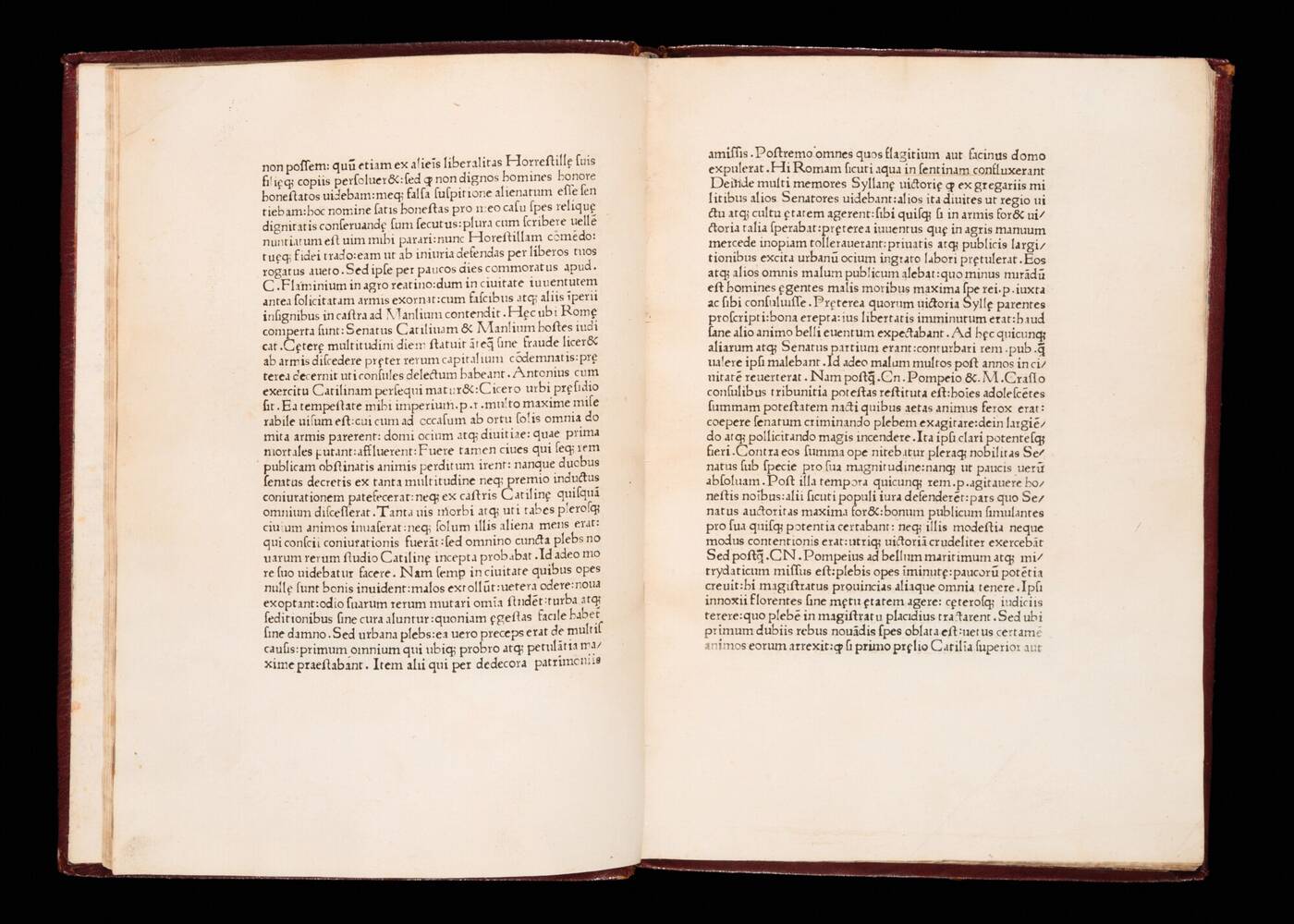
SALLUSTIUS CRISPUS, Gaius. Opera.
N.p. [Italy: Printer of Sallust], , 1470.Folio (285×197mm), 2 parts in one volume. [56] leaves. Collation: [a–e10, f8] (b10 blank). Colophon (f8v): LAUS . DEO. / M. CCCC. LXX. 34 lines per page, Roman type 106R. Initials in red and blue. Bound in seventeenth-century Dutch red morocco, covers decorated with two gilt frames, floral tools and a richly tooled lozenge at the centre; spine in compartments with title lettered in gilt; marbled endpapers, blue silk bookmark. Two leaves featuring an extensive handwritten description of this edition are bound at the beginning of the volume. An old repair on the first leaf, light waterstains, the first and last leaves browned; a very good copy. Provenance: few marginal annotations by a contemporary hand; the Dutch jurist Matthias Röver (1719–1803); the Dutch politician Carel Gerard Hultman (1752–1820; ex-libris on rear pastedown); Charles Filippi (ex-libris); Livio Ambrogio (ex-libris).
Exceedingly rare incunable edition, according to ISTC the second edition of Sallust's De coniuratione Catilinae and De bello Iugurthino. It was published by an unidentified printer with date 1470, the same year of Vindelinus de Spira's Venetian edition, and it is unclear which appeared first. Only two copies in the US (Morgan Library — the only American library to own both 1470 editions of Sallust — and Huntington Library). No other copies are known to have come on the market in over a century. Several differences between the text of the two 1470 editions suggest that they may have been set from independent manuscripts. The book is found in both folio and quarto formats, and the text is set in the same Roman type found in two other books bearing the same date — a law text by Bartolus de Saxoferrato and a devotional tract by Antonius de Vercellis — all three most likely coming from the same typography (Proctor denies the resemblance Brunet sees between the type of the present edition and those used for "un Servius sur Virgile, impr. à Milan, en 1475, sans nom d'imprimeur"). "It has affinities with both Roman and Venetian models, with perhaps a probability in favour of Venice. […] The watermarks of this book are a balance in a circle and a large oxhead with a rod ending in a rosette above and a small crescent in a triangle below." (BMC) The earliest recorded owner of the present copy is the Dutch jurist Matthias Röver. It was then sold at auction in 1806 (see Bibliotheca Röveriana, sive Catalogus Librorum, qui studii inservierunt Matthiae Röveri, Ludguni Batavorum-Amstelodami 1806, lot 243) to Carel Gerard Hultman, the author of the lengthy manuscript note bound at the beginning of the volume. In it, Hultman describes the edition on the base of the catalogue of the Bibliotheca Spenceriana (see vol. II, 409), also attesting its provenance from the Röver collection ('Hocce exemplar est ex Biblioth. Röveriana'), noting that he purchased the book for 50 florins ('nostrum constat 50 florenos') and speculating its possible provenance from the collection of the XVIII-century French bibliophile Louis-Jean Gaignat (see the sale catalogue Supplement à la bibliographie instructive, ou catalogue des livres du cabinet de feu M. Louis Jean Gaignat, tome second, Paris 1769, lot 2900). Hultman's collection was sold in 1821. The sale catalogue highlights the rarity and importance of this edition: "Est editio certissime rarissima et in Bibliothecarum cimeliis conservanda. In Initia hujus exemplaris, fuse egit de eâ doctissimus Defunctus, et hoc opus ab ipso solutum est 50 florenis". (see Bibliotheca Hultmaniana, ['s Hertogenbosch] 1821, lot 19). Gaius Sallustius Crispus (c. 86–35 BC) was one of Rome's major historians. During the civil war of 49–44, he sided with Julius Caesar, who rewarded him by appointing him the as first governor of the province of Africa Nova. Following Caesar's assassination in 44 BC, Sallust retired from public affairs to devote the rest of his life to writing history. He wrote two monographs, his only surviving complete works: the Bellum Catilinae (or De coniuratione Catilinae), on the Catiline conspiracy of 63 BC, and the Bellum Iugurthinum, on the war with the king of Numidia, Jughurtha, in 112–105 BC. Already in ancient times, Sallust was greatly admired as a model historian alongside Thucydides; Tacitus considered him “the most brilliant Roman historian”, and he was praised by St. Augustine. The rich manuscript tradition of his works attests to their popularity between the Middle Ages and the Renaissance, when Sallust was one of the most widely read prose authors. His writings were frequently used in schools for teaching rhetoric, both for their clear Latin style and moralistic outlook on history. His success continued into the second half of the XV century with the advent of the printing press: Sallust was the most widely printed Latin historian for over a hundred years, with ca. 70 incunable editions of his monographs, and 275 editions overall between the XV and XVI century.
BMC VII 1122; Brunet V 79; Goff S-52; GW M39530; ISTC is00052000; Proctor 7384.
Other Books
![Tragoediae septem cum commentariis. [Greek] Edited by Johannes Gregoropoulos Cretensis].](https://www.medariquier.com/typo3temp/pics/a7f4ddada3.jpeg "Tragoediae septem cum commentariis. [Greek] Edited by Johannes Gregoropoulos Cretensis].")
SOPHOCLES
Tragoediae septem cum commentariis. [Greek] Edited by Johannes Gregoropoulos Cretensis].
SOLD OUT
ATANAGI, Dionigi
Rime di diversi nobilissimi, et eccellentissimi autori, in morte della Signora Irene delle Signore di Spilimbergo. Alle quali si sono aggiunti versi...
€ 5.000
VECELLIO, Cesare
Degli Habiti Antichi, et Moderni di Diverse Parti del Mondo Libri due, fatti da Cesare Vecellio, & con Discorsi da Lui Dichiarati.
SOLD OUT
MODESTI, Publio Francesco
Pub. Francisci Modesti Ariminensis, ad Antonium Grimanum. P.S.Q.V. Venetias.
€ 23.000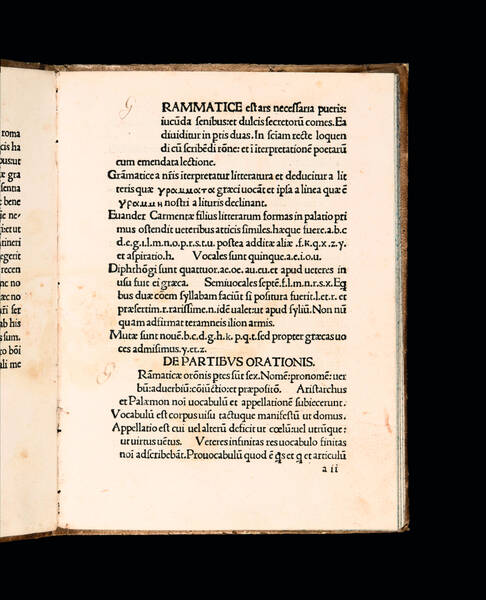
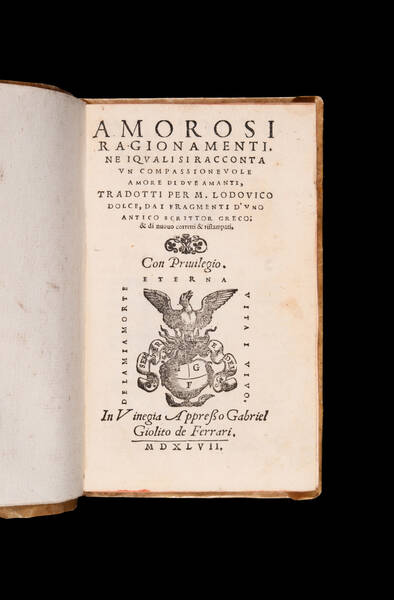
[ACHILLES TATIUS]
Amorosi ragionamenti ne i quali si racconta un compassionevole amore di due amanti, tradotti per m. Lodovico Dolce.
€ 600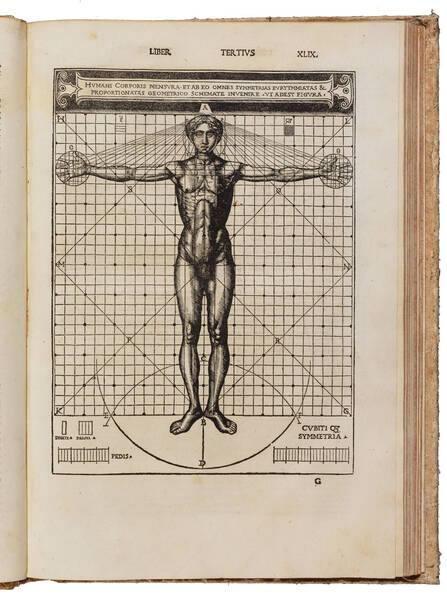
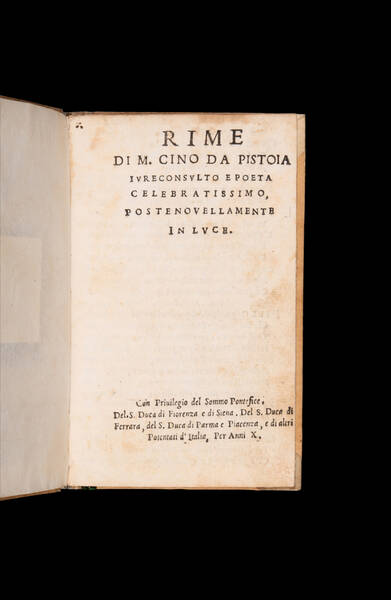
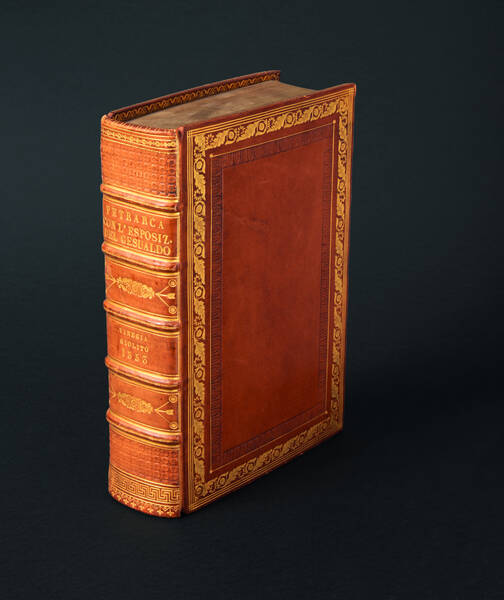
PETRARCA, Francesco
Il Petrarcha con l'espositione di m. Giouanni Andrea Gesualdo, nuouamente ristampato, e con somma diligenza corretto, con nuoua tauola di tutte le...
SOLD OUT
ARCHIMEDES
Archimedis opera non nulla à Federico Commandino urbinate nuper in latinum conversa, et commentariis illustrata.
€ 15.000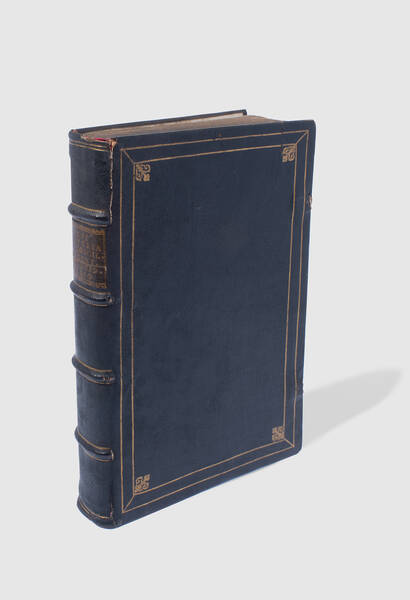
SARPI, Paolo
Historia del concilio tridentino di Pietro Soave Polano. Nella quale si scoprono tutti gl'artificii della Corte di Roma, per impedire che né la...
SOLD OUT![La prima [seconda] parte de ragionamenti. Commento di ser Agresto da Ficaruolo, sopra la prima ficata del padre Siceo. Con la diceria de nasi.](https://www.medariquier.com/typo3temp/pics/00eb26b1e7.jpg "La prima [seconda] parte de ragionamenti. Commento di ser Agresto da Ficaruolo, sopra la prima ficata del padre Siceo. Con la diceria de nasi.")
MEDA RIQUIER rare books ltd.
4 Bury Street St James's
SW1Y 6AB London
Phone +44 (0) 7770457377
info@medariquier.com