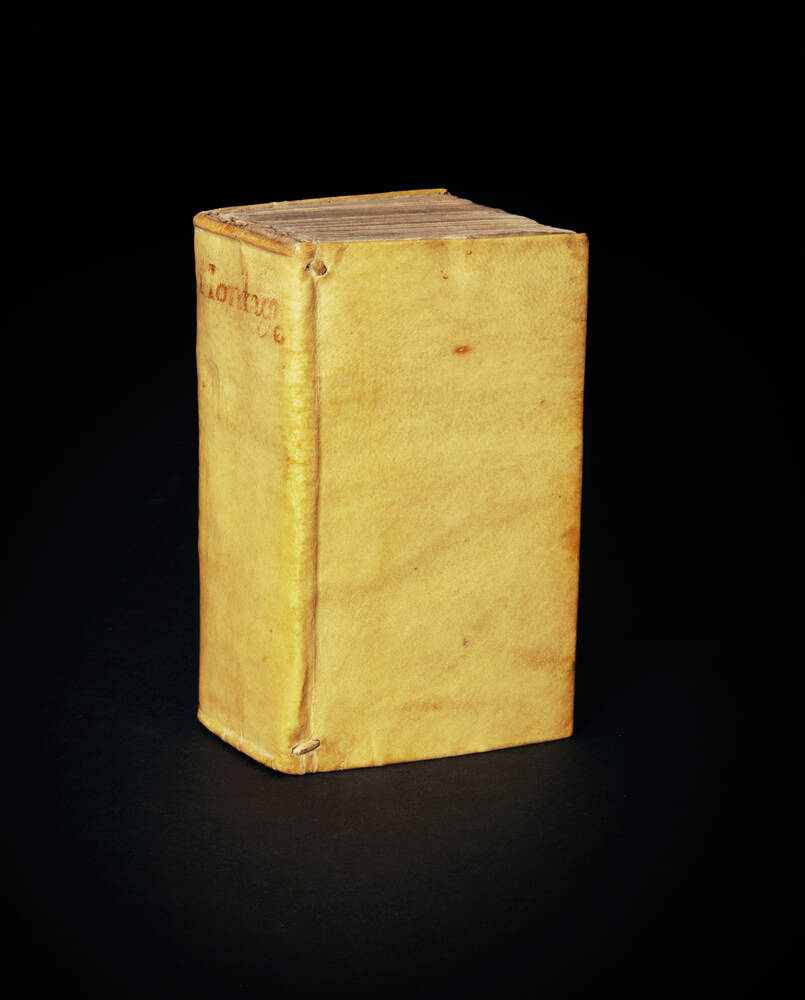
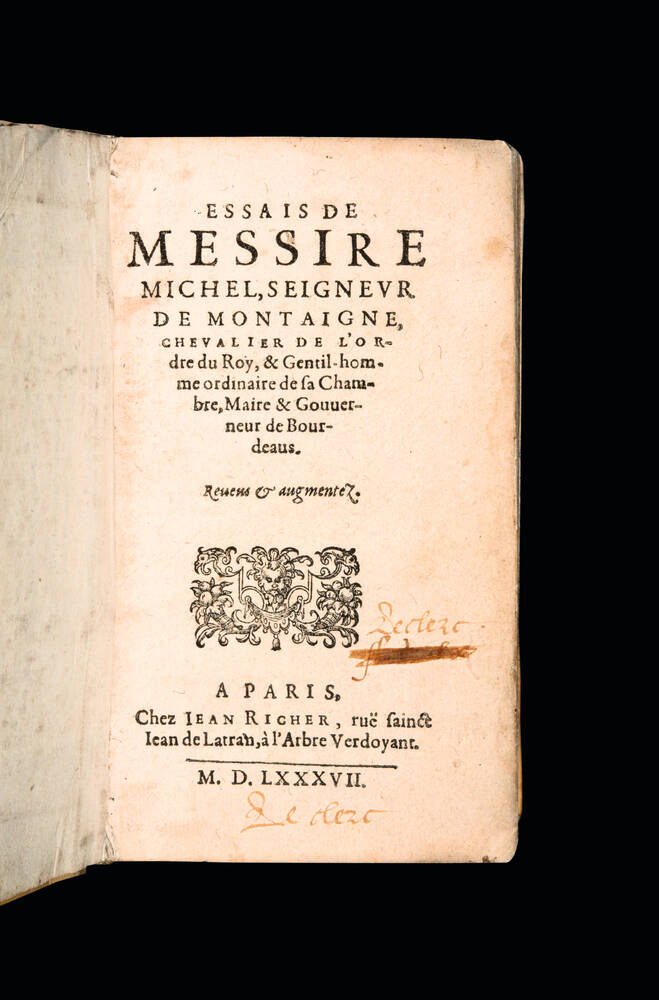
MONTAIGNE, Michel de. Essais de Messire Michel signeur de Montaigne… Reveus & augmentez.
Paris, chez Jean Richer, rue Saint Jean de Latran, à l'arbre verdoyant., 1587.Duodecimo (141×80mm). [4] leaves, 1075 pages [i.e. 1076], 2 blank leaves. Bound in contemporary stiff vellum with manuscript title on spine. Marginal loss to leaves K11 and 2P11 not affecting text, inner margin of quire 2T restored with partial loss of text to one line each page. Provenance: "Leclerc" manuscript ex-libris on title-page; Lobichon (?) manuscript note on rear paste-down. A good copy in contemporary binding.
The rare first Parisian edition of Montaigne's masterpiece, one of the most important works of sixteenth-century French literature. This is the third edition overall, and, like the previous ones, it contains the first two books of the Essais; the third would appear only in 1588. The original edition of Montaigne's Essais was published in Bordeaux in 1580 by the printer and bookseller Simon Millanges. These two volumes in-octavo "appear to be the result of a hasty work subjected to the constraints of an impression by forms, in other words composing the pages nonconsecutively to accelerate the printing process. The author took part in the composition until the last moment in order to complete his text, as demonstrated by the disorder caused in book I by the integration of a chapter made up of sonnets by La Boétie. Apart from a disparity of fonts and type size between the two volumes, the book displays countless pagination errors and misprints as well as an indeterminate number of textual variants produced during the printing process" (Balsamo). The second edition was printed by the same Millanges, two years later: "the text had been carefully reviewed and corrected; it displayed numerous detailed modifications, as well as about thirty additions of more than two lines and seventeen new quotations." (ibid.) The present, third edition of the Essais is a resetting of the 1582 edition: "it may have been unauthorised or the result of an agreement between Richer and Millanges, the holder of the privilège, which did not expire until March 1588" (Sayce). A few corrections have been made, including amending the chapter number for Etienne de La Boétie's sonnets XXVIII and XXIX. Michel Eyquem de Montaigne was born into a wealthy bourgeois family in 1533. At the age of 38, disgusted by the legal profession and wishing to dedicate himself to a solitary life, he retired to his father's castle in Périgord. There, he composed his magnum opus, the Essais, a collection of writings on a wide variety of topics that reflect Montaigne's multifaceted literary interests. A strong sceptic of the culture and customs of his time, Montaigne "shook some fundamental aspects of Western thought, such as the superiority we assign to man over animals, to European civilization over 'Barbarians', or to reason as an alleged universal standard. […] In Montaigne we have a writer whose work is deeply infused by philosophical thought. One verse out of sixteen in Lucretius' De natura rerum is quoted in the Essays. […] Montaigne managed to internalize a huge breadth of reading, so that his erudition does not appear as such. He created a most singular work, yet one that remains deeply rooted in the community of poets, historians, and philosophers. His decision to use only his own judgment in dealing with all sorts of matters, his resolutely distant attitude towards memory and knowledge, his warning that we should not mix God or transcendent principles with the human world, are some of the key elements that characterize Montaigne's position. As a humanist, he considered that one has to assimilate the classics, but above all to display virtue, 'according to the opinion of Plato, who says that steadfastness, faith, and sincerity are real philosophy, and the other sciences which aim at other things are only powder and rouge." (Stanford Encyclopedia of Philosophy)
Brunet III 1835; Graesse IV 579; Sayce & Maskell 3; Balsamo, Jean. "Publishing history of the Essays." In The Oxford Handbook of Montaigne, edited by Philippe Desan. Oxford-New York: Oxford University Press, 2016.
Other Books
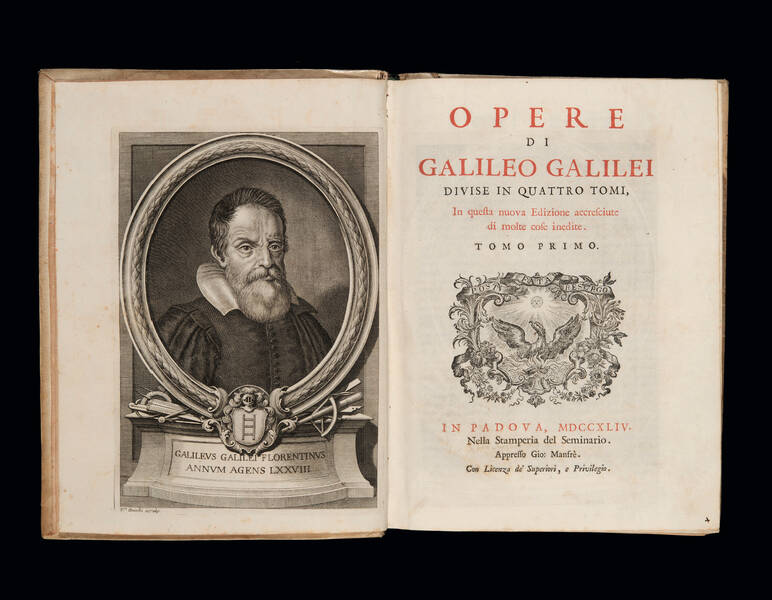
GALILEI, Galileo
Opere, divise in quattro tomi, in questa nuova edizione accresciute de molti cose inedite.
SOLD OUT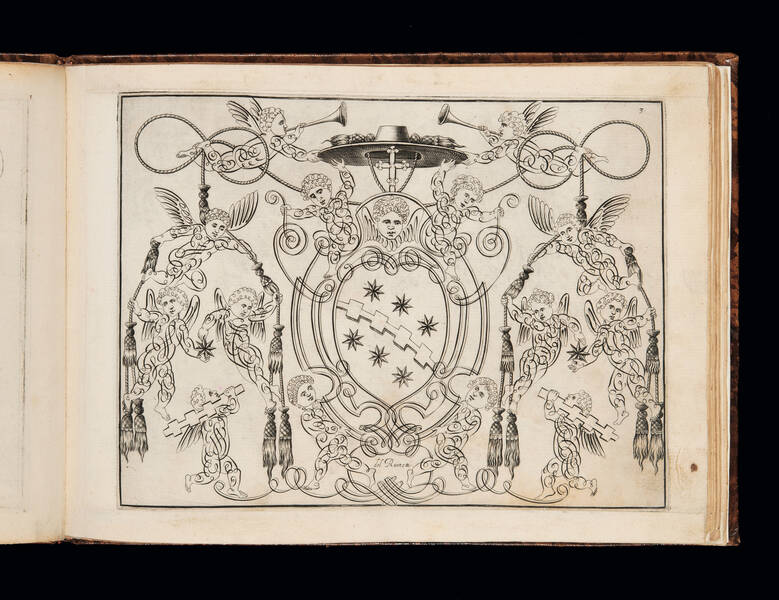
RUINETTI, Tomaso
Idea del buon scrittore, opera prima di Tomaso Ruinetti da Ravena a’beneficio de’desiderosi d’imitare le vere forme dello scrivere.
€ 8.000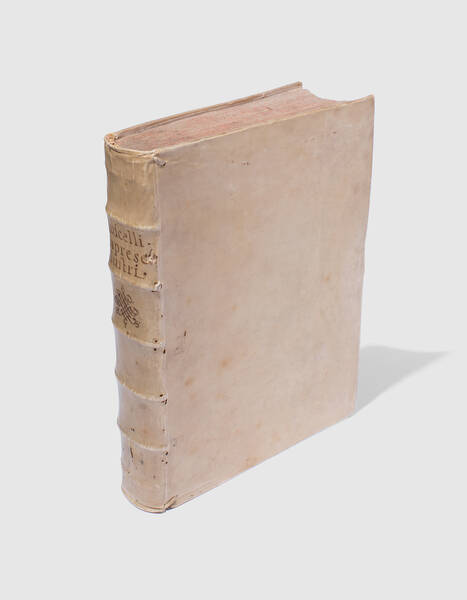
RUSCELLI, Gerolamo
Le imprese illustri con espositioni, et discorsi del s.or Ieronimo Ruscelli.
SOLD OUT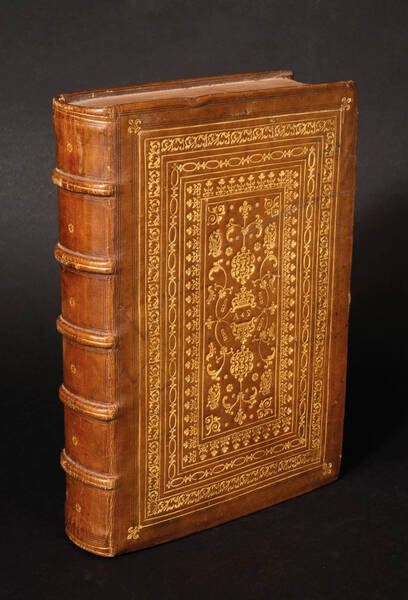
LIVIUS, Titus
Le deche di T. Liuio padouano delle historie romane, tradotte nella lingua toscana, da Iacopo Nardi cittadino fiorentino, & nuouamente dal medesimo...
€ 30.000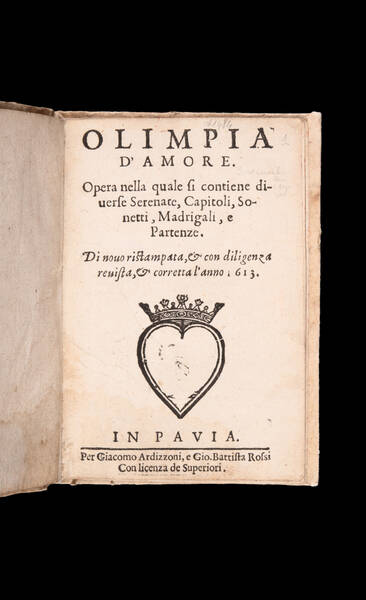
[ALESSANDRI, Baldassarre Olimpo]
Olimpia d'amore. Opera nella quale si contiene diverse serenate, capitoli, sonetti, madrigali e partenze.
€ 800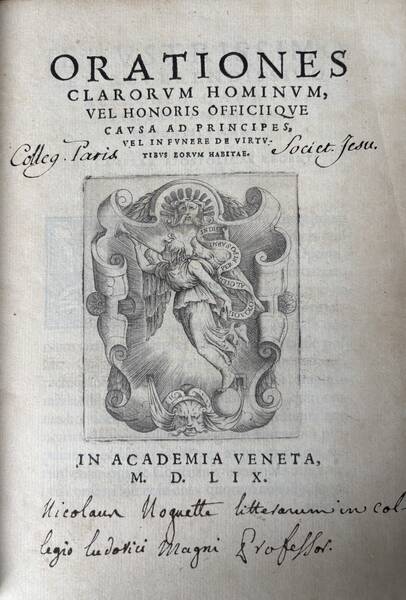
ACCADEMIA VENETA
Orationes clarorum hominum, vel honoris officiique causa ad principes, vel in funere de virtutibus eorum habitae.
€ 1.500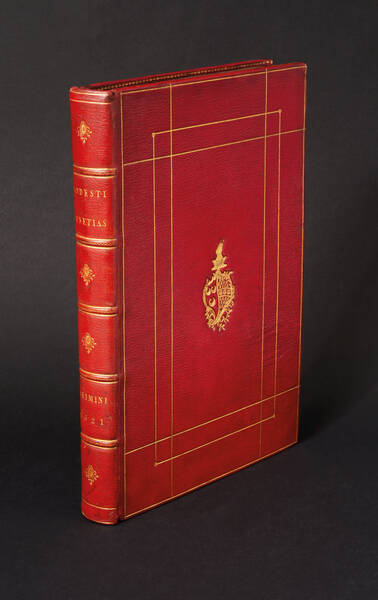
MODESTI, Publio Francesco
Pub. Francisci Modesti Ariminensis, ad Antonium Grimanum. P.S.Q.V. Venetias.
€ 23.000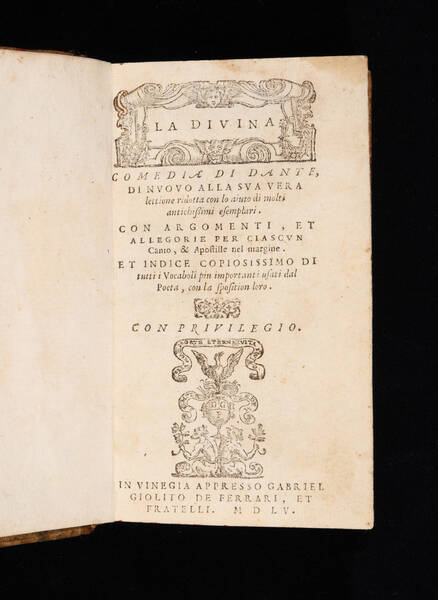
ALIGHIERI, Dante
La Diuina Comedia di Dante, di nuouo alla sua vera lettione ridotta con lo aiuto di molti antichissimi esemplari. Con argomenti, et allegorie per...
SOLD OUT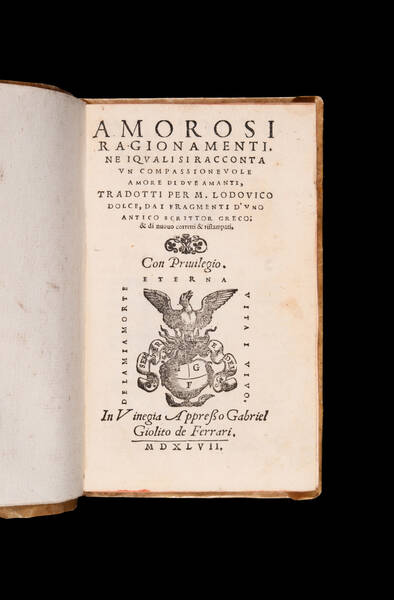
[ACHILLES TATIUS]
Amorosi ragionamenti ne i quali si racconta un compassionevole amore di due amanti, tradotti per m. Lodovico Dolce.
€ 600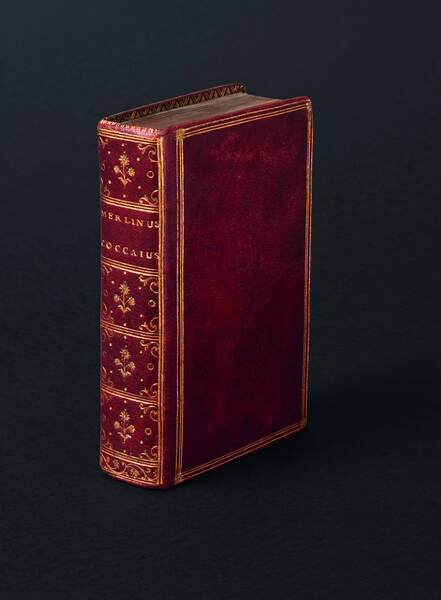
FOLENGO, Teofilo
Opus Merlini Cocaii poetae Mantuani Macaronicorum, totum in pristinam formam per me magistrum Acquarium Lodolam optime redactum in his infra notatis...
€ 11.000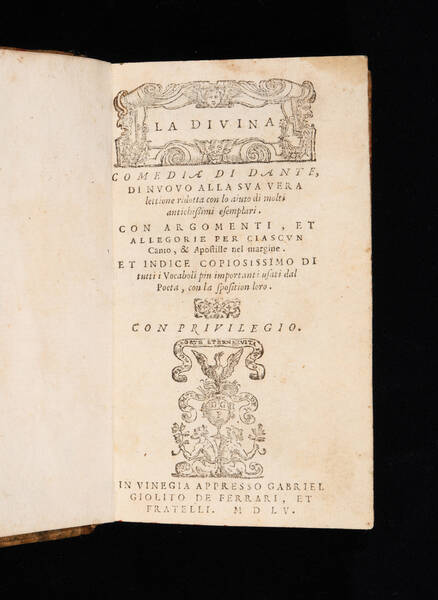
ALIGHIERI, DANTE
La Divina Comedia Di Dante, di nuouo alla sua vera lettione ridotta con lo aiuto di molti antichissimi esemplari. Con argomenti, et allegorie per...
SOLD OUT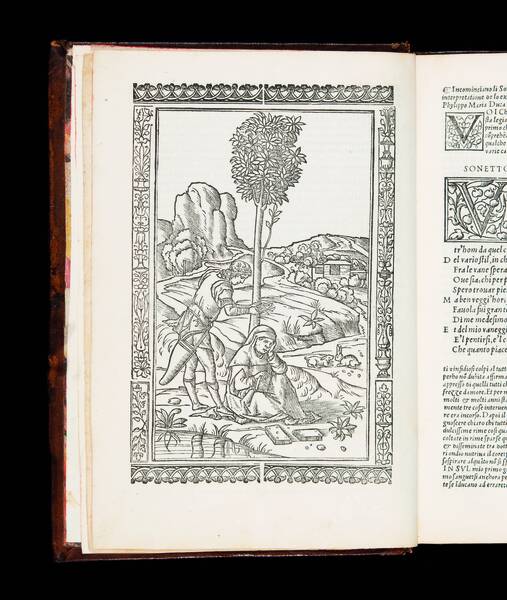
PETRARCA, Francesco
Li Sonetti canzone e triumphi del Petrarcha con li soi commenti non senza grandissima euigilantia et summa diligentia correpti et in la loro primaria...
SOLD OUT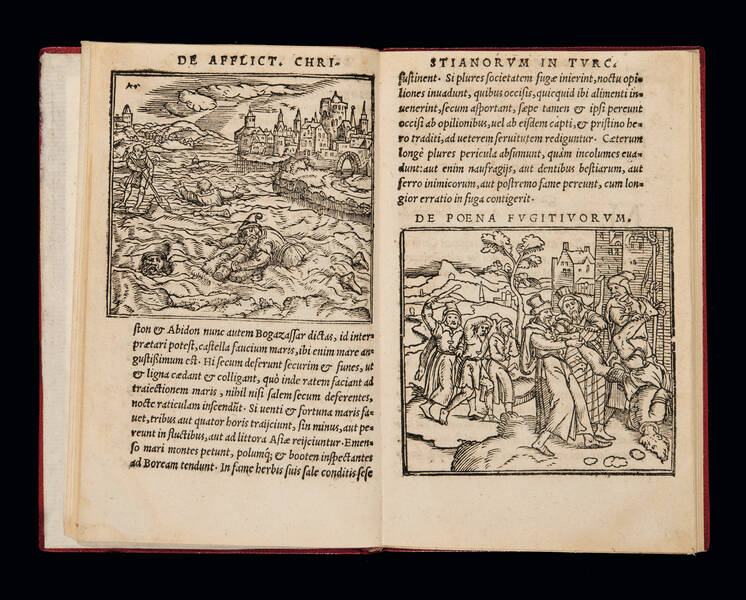
GEORGEVIC, Bartolomej
De afflictione, tam captivorum quam etiam sub Turcae tributo viventium christianorum.
SOLD OUT
ZOCCHI, Giuseppe
Scelta di XXIV vedute delle principali contrade, piazze, chiese, e palazzi della citta di Firenze.
€ 45.000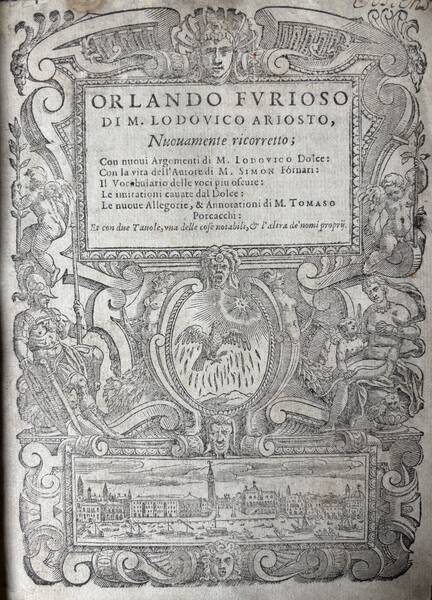
ARIOSTO, Ludovico
Orlando Furioso di M. Lodovico Ariosto, nuovamente ricorretto; con nuovi argomenti di M. Lodovico Dolce: con la vita dell'autore di M. Simon Fornari:...
€ 3.000
MEDA RIQUIER rare books ltd.
4 Bury Street St James's
SW1Y 6AB London
Phone +44 (0) 7770457377
info@medariquier.com