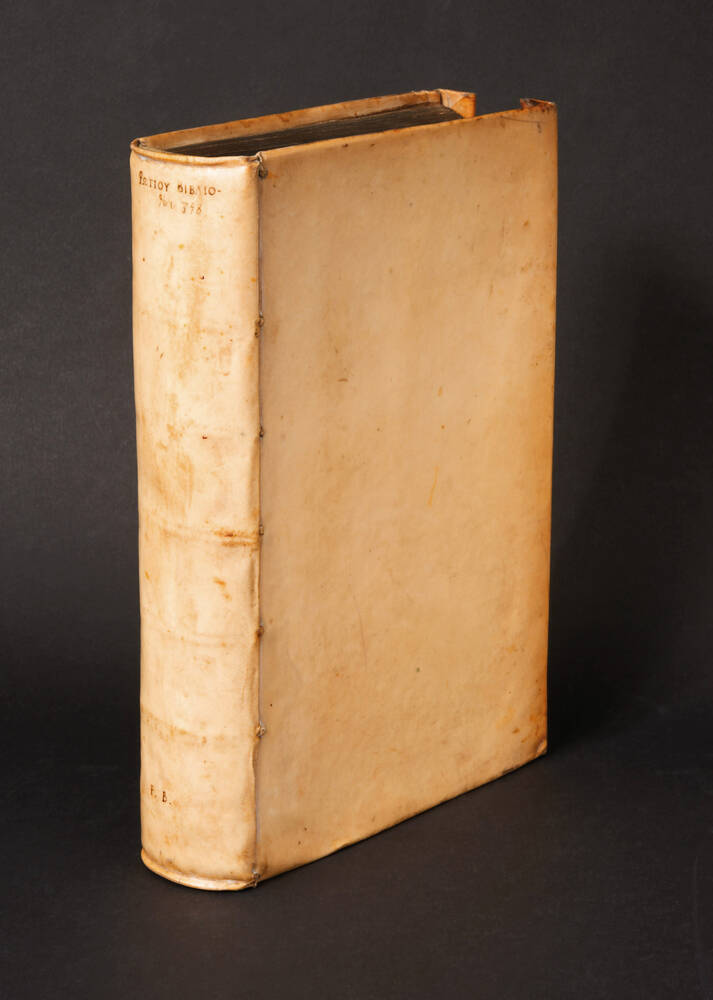
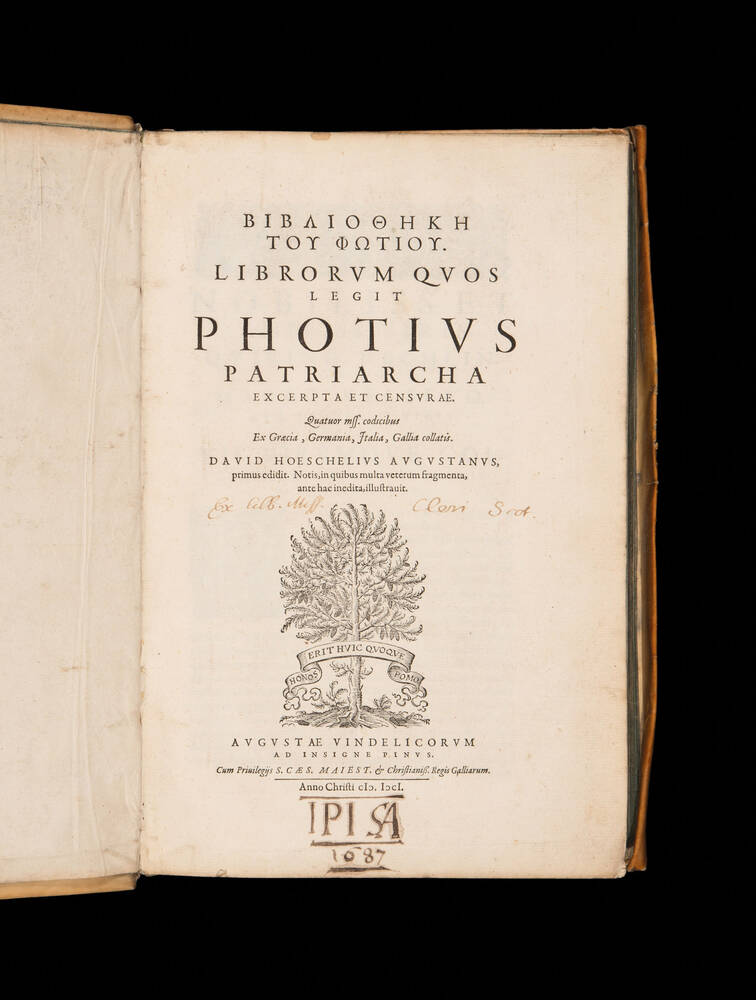
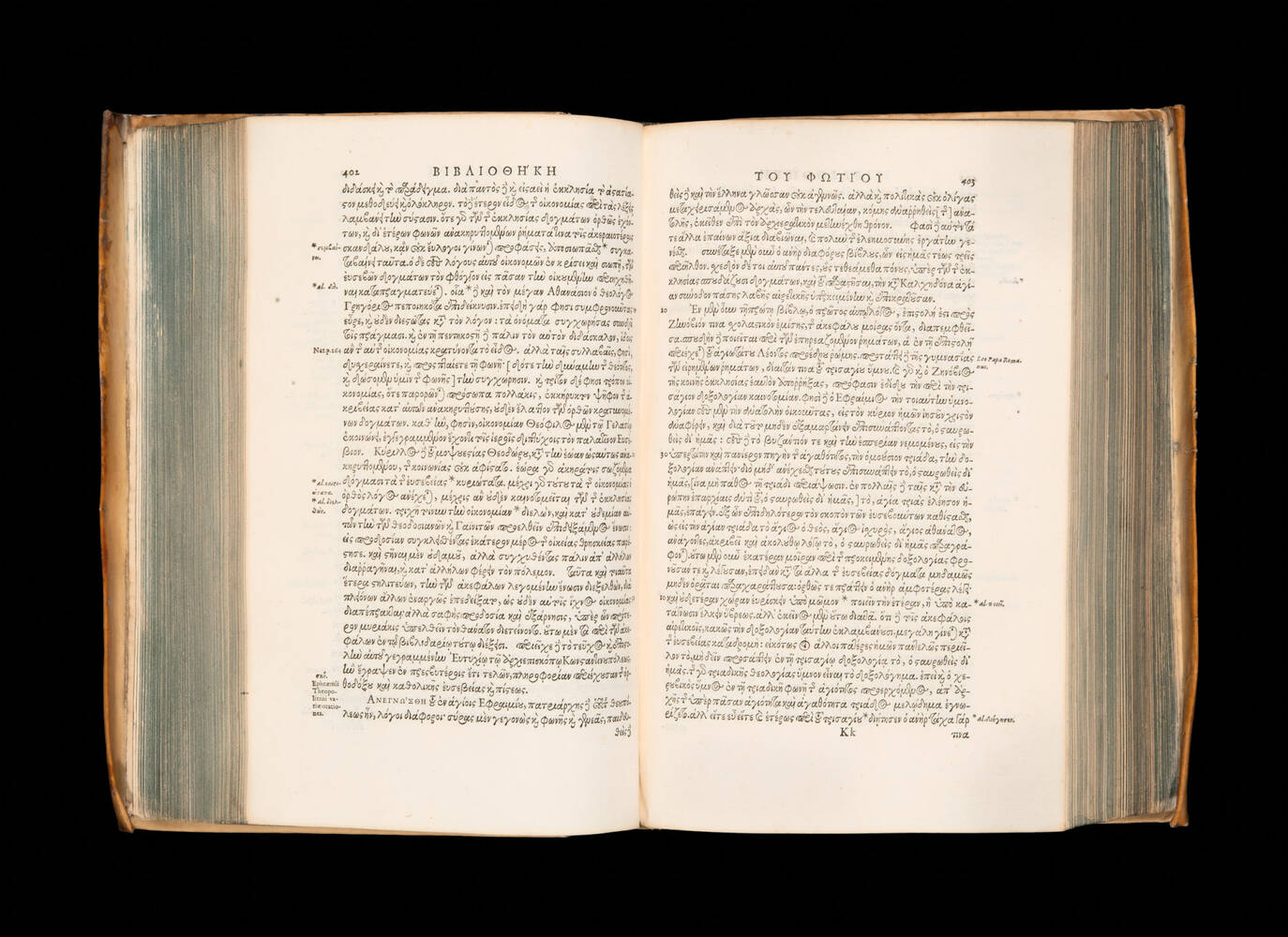
PHOTIUS. Βιβλιοθηκη... Librorum quos legit Photius Patriarca excerpta et censurae.
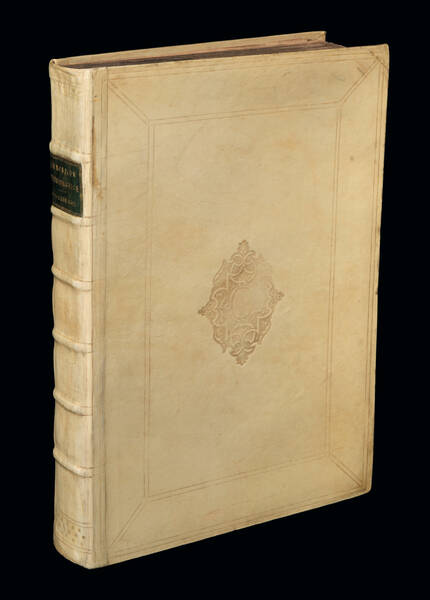
Augsburg, ad insigne Pinus, 1601 (ex officina typographica Johannis Praetorii, anno 1601).Folio (325 x 211mm.), [12], 985, [i.e. 967, 1] woodcut printer's device on title-page and above colophon, woodcut initials, head- and tail-pieces. A small paper flaw in the white lower margin of one leaf, overall a very fine copy in contemporary vellum with foredge flaps, blue edges. Provenance: IPI [in partibus infidelium?] SA, initials at foot of title-page dated 1687; "Ex libb. Miss. Cleri Scot.", inscription on title-page [relating to a Catholic mission to Scotland or the Catholic clergy there?]; Sir William D. Geddes (1828-1900, professor of Classical Greek at Aberdeen), armorial bookplate.
Editio Princeps of Bibliothēkē Tu Phōtiu, published in Greek. A compilation of 279 book reviews written in 820-827 AD by the Patriarch of Constantinople Photius, and one of the most remarkable texts of Byzantine intellectual history.
The most influential work authored by Photius, the Bibliotheca is written in the form of letters addressed to his brother Tarasius - but in essence, to all those who sought knowledge - aimed as a guide over a large quantity of books available. This text is a valuable source for understanding the state of literature, philosophy, and science in the Eastern Roman Empire during the 9th century. The 280 summaries are arranged in alphabetical order by the names of the authors, of which many works have been lost to modern times. These summaries are interspersed with extracts as well as Photius' critical opinions, particularly when the texts are considered poorly written, unreliable, or heretical. The work offers glimpses into the scholarly debates and trends of the medieval Byzantine world, making clear the complex relationship between classical learning and Christianity.
Photius of Constantinople (c. 810 - c. 893), was a Byzantine scholar who rose to ecclesiastical prominence in 858 as the Patriarch of Constantinople. Amidst tensions with the Latin Church due to theological and jurisdictional disputes with Pope Nicholas I, he was exiled in 867. It was during this period that Photius engaged in scholarly pursuits from which the Bibliotheca emerged. Returning to the Patriarchate in 877, Photius faced internal conflicts within the Eastern Orthodox Church and strained relations with the Latin Church. His involvement in missionary activities, particularly in Bulgaria and Moravia, contributed to the Christianization of these regions.
The Bibliotheca is not only a literary work but also an important historical document that sheds light on the intellectual life of the Byzantine world in the 9th century. Religious and theological texts by Christian patristic author make up the main body of the work; however, a vast range of subjects is also covered, including history, philosophy, science, medicine, and rhetoric. While some of the works mentioned were already known in the sixteenth and seventeenth centuries, such as Socrates' Ecclesiastical History, Appian's Roman History and Eusebius' theological works, others were obscure or even completely unknown until the publication of this volume, such as the excerpts from the medical works of Ctesias, and the historical texts of Arrian and Hesychius.
The manuscripts of Bibliotheca were lost for many centuries, but excerpts and fragments survived in various libraries, some found in the Vatican Library, others in Venice and Paris. The fragments were rediscovered in the beginning of the 17th century and edited into the present volume by David Hoeschel (1556-1617), a German librarian, philologist and classical scholar who focused his career in editing and publishing Greek and Latin classical texts.
VD17 3:314533D; USTC 2136993; Brunet IV 624; Graesse V 276
Other Books
ATANAGI, Dionigi
Rime di diversi nobilissimi, et eccellentissimi autori, in morte della Signora Irene delle Signore di Spilimbergo. Alle quali si sono aggiunti versi...
€ 5.000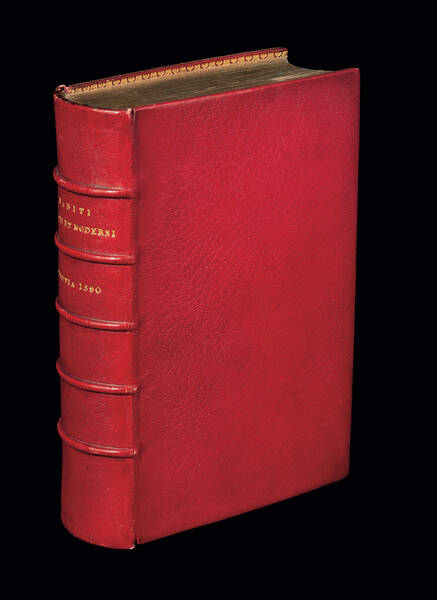
VECELLIO, Cesare
Degli Habiti Antichi, et Moderni di Diverse Parti del Mondo Libri due, fatti da Cesare Vecellio, & con Discorsi da Lui Dichiarati.
SOLD OUT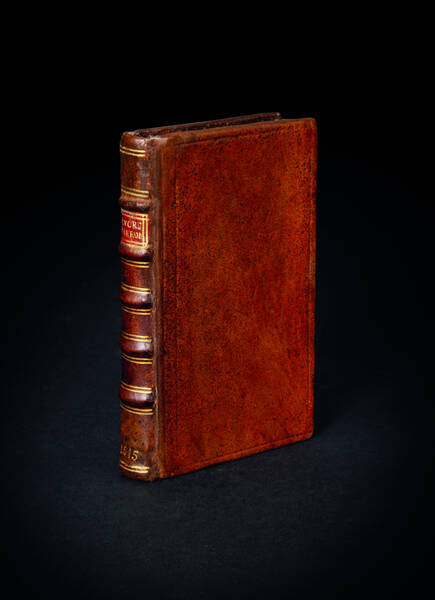
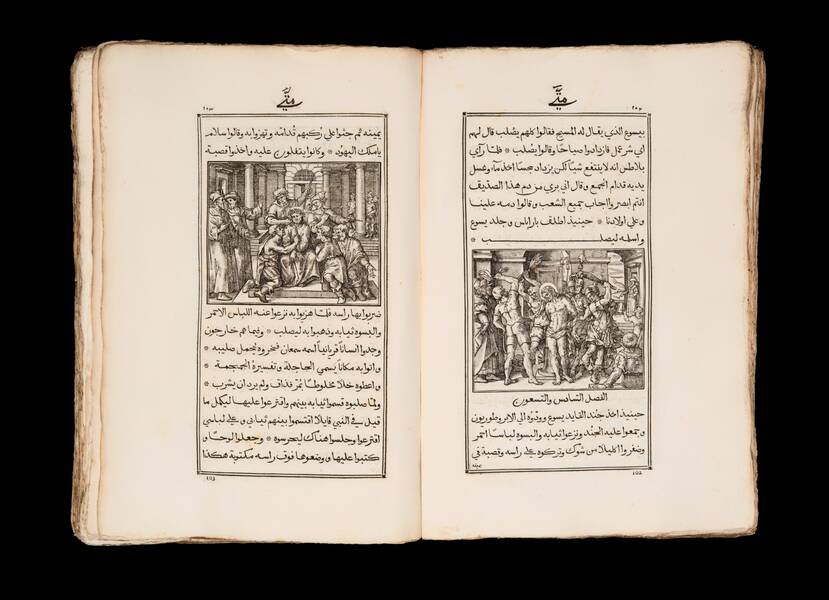
[BIBLIA ARABICA]
Evangelium Sanctum Domini nostri Iesu Christi conscriptum a quatuor Evangelistis sanctis, id est Matthaeo, Marco, Luca et Iohanne.
SOLD OUT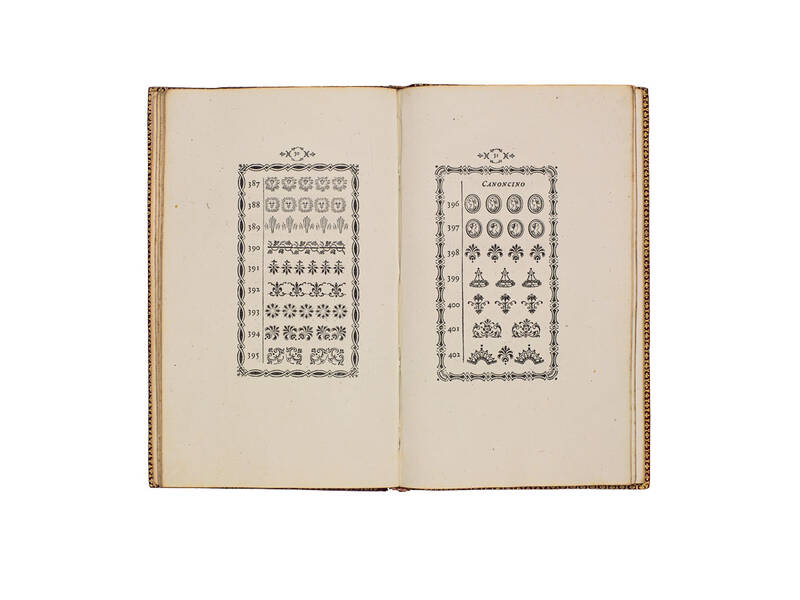
[BODONI]
Fregi e Majuscole incise e fuse da Giambattista Bodoni direttore della Stamperia Reale
SOLD OUT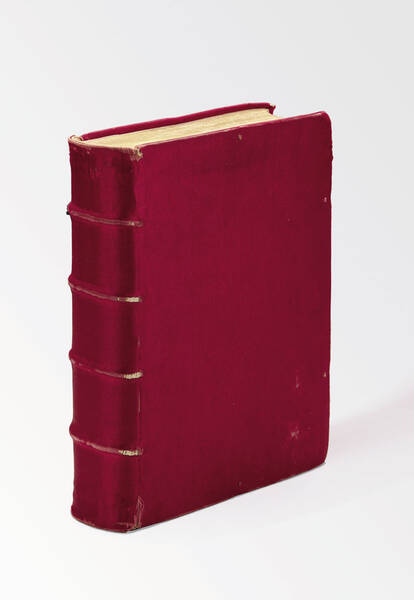
SANSOVINO, Francesco
Venetia città nobilissima et singolare, Descritta in XIIII libri da M. Francesco Sansovino
SOLD OUT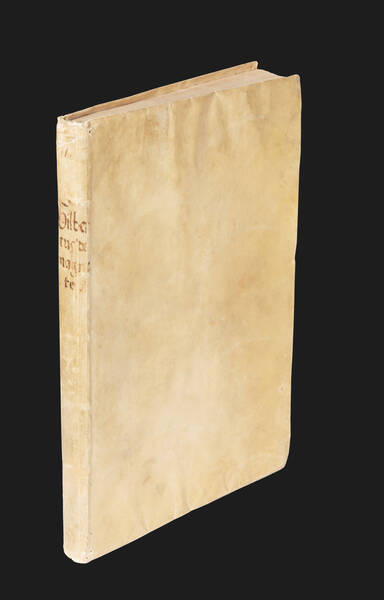
GILBERT, William
De magnete, magneticisque corporibus, et de magno magnete tellure; Physiologia nova, plurimis & argumentis, & experimentis demonstrata.
SOLD OUT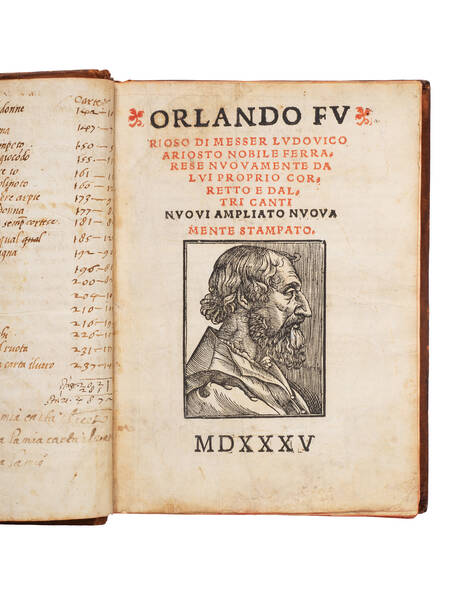
ARIOSTO, Lodovico
Orlando furioso di messer Ludovico Ariosto nobile ferrarese nuovamente da lui proprio corretto e daltri canti nuovi ampliato, nuovamente stampato.
SOLD OUT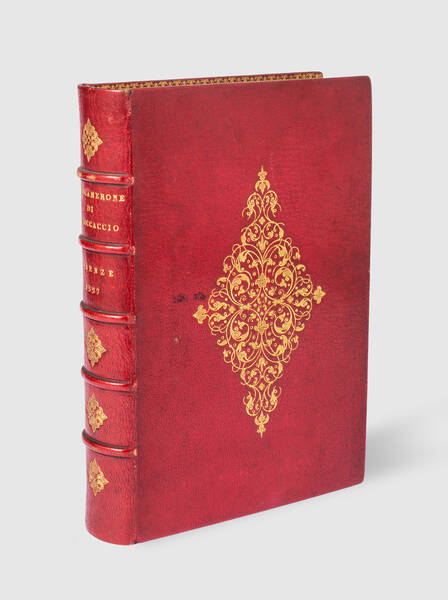
BOCCACCIO, Giovanni
Il Decamerone di m. Giouanni Boccaccio nuouamente corretto et con diligentia stampato.
SOLD OUT
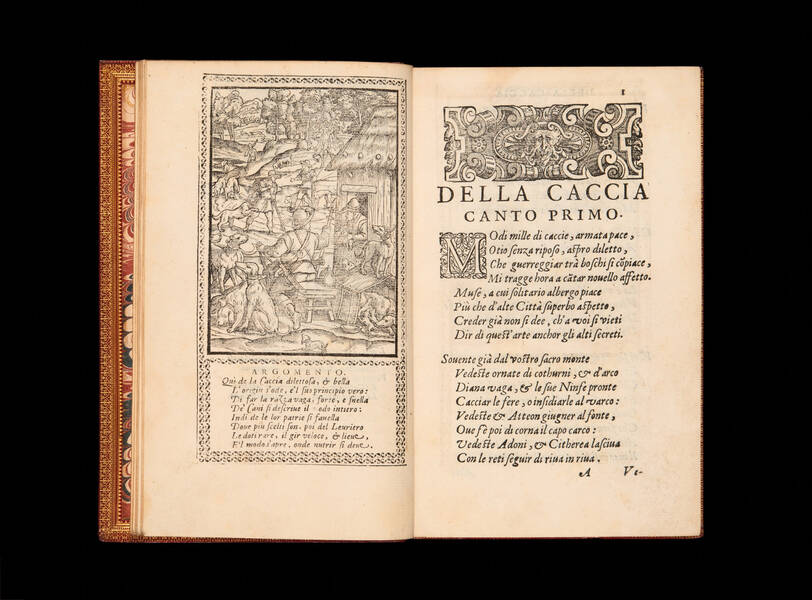
VALVASONE, Erasmo da
Della caccia poema del signor Erasmo di Valuasone. All'ill. signor Cesare di Valuasone suo nepote. Con gli argomenti a ciascun canto del sig. Gio....
€ 3.500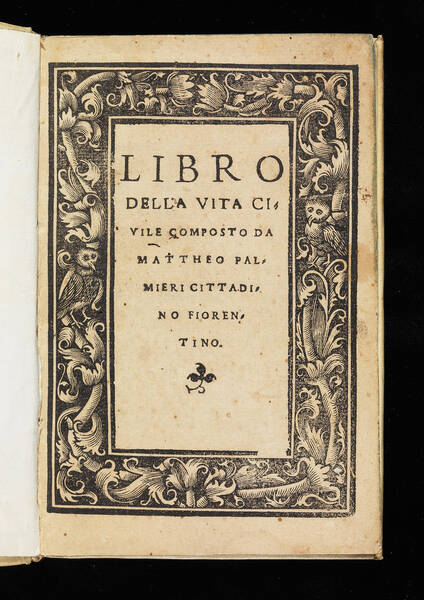
PALMIERI, Matteo
Libro della vita civile composta da Mattheo Palmieri cittadino fiorentino.
SOLD OUT
MEDA RIQUIER rare books ltd.
4 Bury Street St James's
SW1Y 6AB London
Phone +44 (0) 7770457377
info@medariquier.com