MERCATI, Michele. Metallotheca opus posthumum.
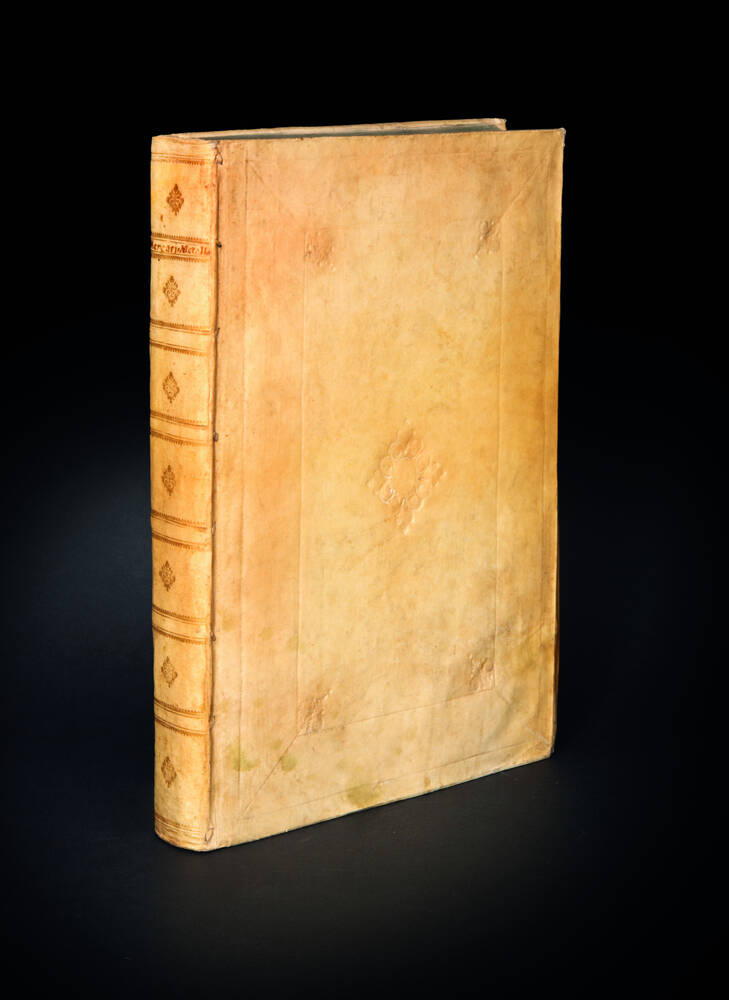
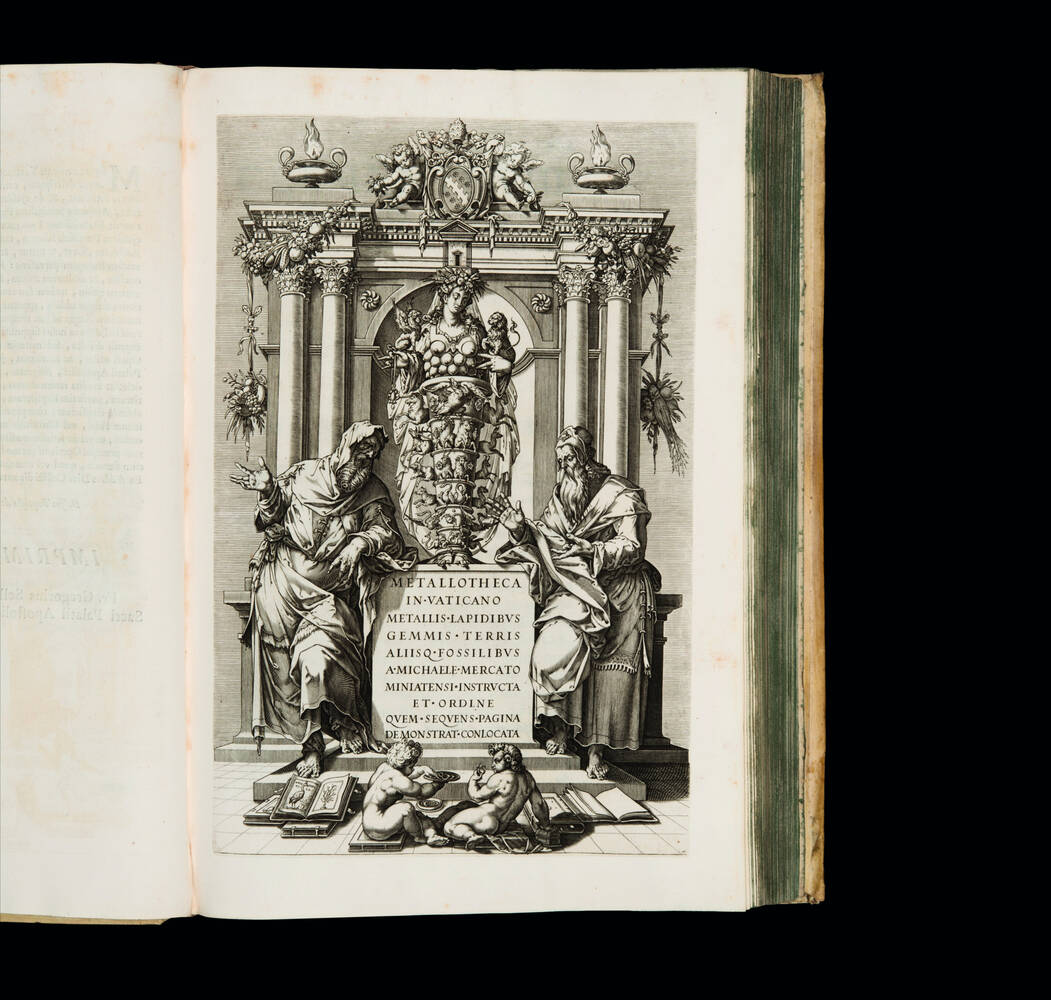
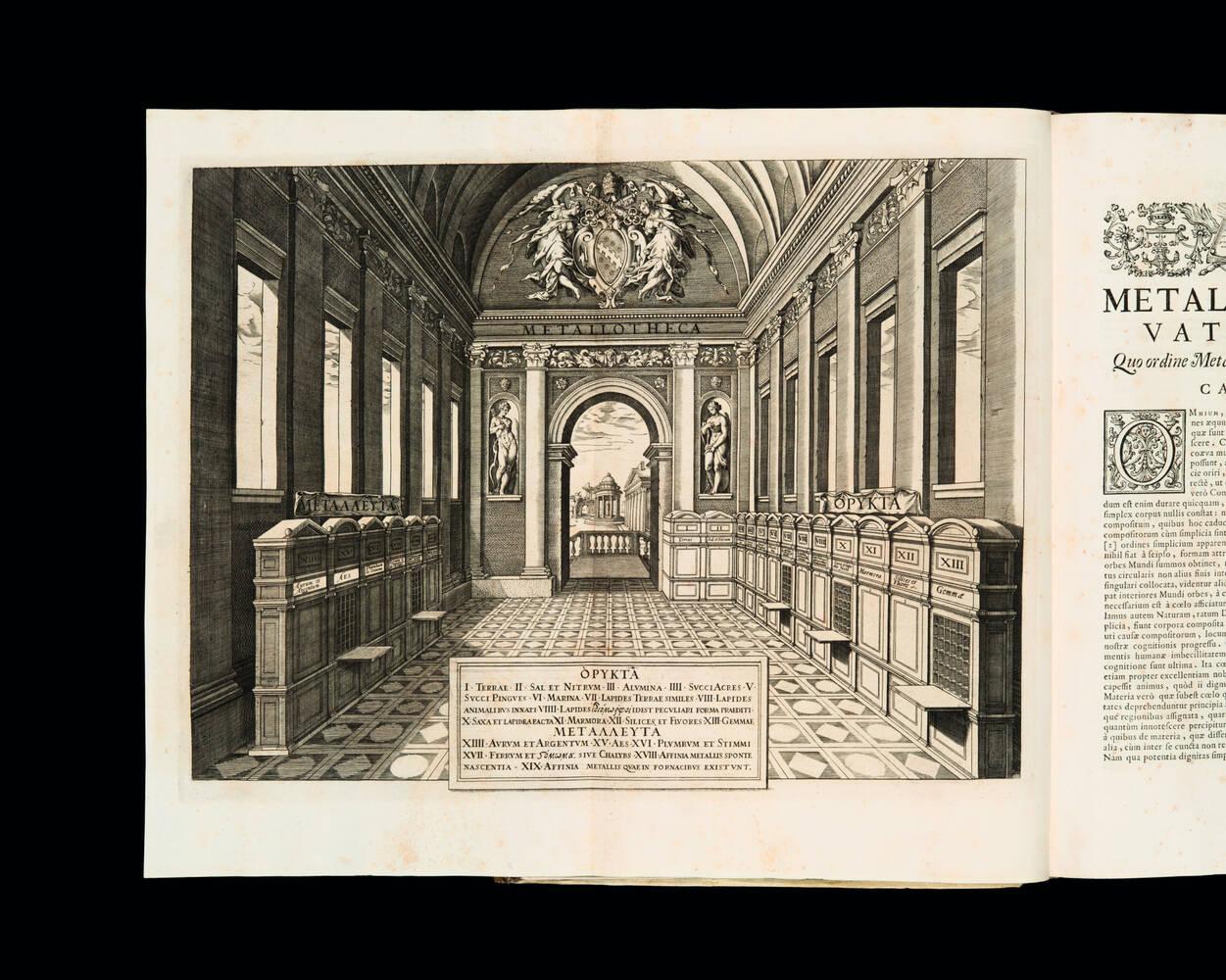
Rome, Giovanni Maria Salvioni., 1719.Folio (378×260mm), 2 parts in one volume. I: 378 pages; II: 53 pages. Half-title, engraved frontispiece signed by Johann Jacob Frey, title-page imprinted in red and black with engraved vignette. Mercati's portrait after a painting by Tintoretto at the beginning, folding view of the museum, folding view of the mines of Pozzuoli and 150 engravings of the museum's specimens. In the appendix: title-page printed in red and black with engraved arms of Clement XI, portrait of Giovanni Maria Lancisi and 20 engravings repeated from the first part. Some marginal foxing, a few leaves lightly browned, one repaired tear in the white margin at M1, but overall a very fine copy in contemporary Italian stiff vellum over pasteboards, covers blind-decorated with double frames, cornerpieces and a central arabesque, spine in compartments with gilt tools, blue edges.
First edition, second issue of the catalogue of the Vatican mineralogical museum, a milestone in the history of mineralogy and metallurgy. Its author, Michele Mercati (1541–1593), was the head physician at the papal court in Rome and the director of the Vatican Botanical Gardens. In the 1570s, he began amassing what soon became the most important mineralogical collection in Europe, and displayed the numerous specimens he collected within nineteen cabinets in the halls of the Vatican, with thirteen of these cabinets containing minerals and the other six containing metallic substances. The catalogue of the collection is structured "as if it were the embodiment of that hall, with its furniture; chapters, or 'Armaria', divide themselves into 'loculi', i.e. the cabinets' drawers or receptacles in which, presumably, each mineral object might have been stored. An engraving of one such cabinet, labelled with its contents, heads each chapter, while indexes on each Armarium's final pages exhaustively list every object in the collection. Finally, intricate engravings showing hundreds of what are clearly, in their oddity and unusual detail, individual specimens, dominate the accompanying verbal descriptions. […] Every page of the Metallotheca seems to attempt to deny its own status as a book, to testify to the fact that the Metallotheca as a museum preceded, and somehow engendered, its current printed incarnation." (Cooper, p. 4) "Crucial to this task were the illustrations of these very objects which Mercati had commissioned an expert German engraver, Anton Eisenhout, to produce. Thanks to these illustrations, the Metallotheca, noted Mercati, would contain not only an 'explication' of the objects in question, but 'the forms of the things themselves [earundem rerum formas]'. Drawn directly from the individual specimens under Mercati's apparently strict supervision, these engravings were to ensure the faithfulness of the Metallotheca to the 'singula res' which he had decided to describe." (ibid., p. 6) "And through its very structure, the Metallotheca moved beyond the mineral, to become representative not just of one natural kingdom, but of the entire universe. […] The very way in which the Metallotheca was ordered, with its sequence of the Armaria, or chapters, reveals a 'natural' progression, in which the Metallotheca, commencing with the simple earths, advances gradually towards interconnection with the other two natural kingdoms, i.e. , in the chapters on 'Marina' and 'Stones Innate to Animals', which, with the emphasis of the former on plants (or supposed plants) and the emphasis of the latter on animals, move beyond the confines purely of the mineral realm to explore its links with the rest of nature. […] The Metallotheca might thus be read as a natural history not just of minerals, but of the entire natural world." (ibid., p. 7) "The progression outlined above culminates in the ninth Armarium of the Metallotheca, containing 'idiomorphic' rocks. In an apparent attempt to classify the unclassifiable, Mercati consigned to this Armarium all of those minerals which, possessing 'peculiar forms', he seems to have been unable to accommodate in any other Armarium. These specimens, many of which would now be identified as fossils, represented some of the most spectacular in Mercati's possession, and, perhaps owing to their very singularity and strangeness, Mercati often seems to have fallen short of textual explanations for them, with the result that the numerous engravings which Mercati commissioned to capture their visual appearance end up dominating their much shorter accompanying descriptions. Within this one Armarium, which occupies, owing to the space taken up by these engravings, fully half of the printed Metallotheca's pages, the same progression through the kingdoms of nature that emerges in the organization of the book as a whole can also be found, as the contents of the 'loculi' advance from rocks displaying simple geometrical forms, to rocks displaying the images of plants, all the way up through rocks displaying the body parts of animals. This progression thereby mirrors not only the larger text of the Metallotheca, but the structure of the natural world as well […]. This Armarium might thus be seen to reveal, perhaps more clearly than any other part of the Metallotheca, the tension between the very particularity of the objects on which the Metallotheca was based, and the universality of Mercati's attempt to arrange and describe these objects in a manner which would include not only everything in the mineral kingdom, but in all of the other kingdoms of nature as well." (ibid., p. 8) Mercati's death in 1593 not only left unfinished the Metallotheca, his foremost work — as the manuscript described only nine out of the museum's nineteen cabinets — but also led to the gradual dismantlement of the mineralogical collection itself. His friends and later heirs tried and failed to publish the manuscript, which lay forgotten until 1665 when it was purchased by the Florentine humanist Carlo Dati, who also attempted to publish it — again without success. It was not until 1717 that the first edition of the Metallotheca finally appeared. It was printed by initiative of Giovanni Maria Lancisi, the head physician at the Papal court, and with the support of Pope Clement XI. This edition featured Mercati's biography and extensive notes to the text by Pietro Assalti, a young professor of botany, a scholar of oriental languages and librarian at the Vatican. A second issue was published in 1719 and included an appendix with parts of the work that had been discovered only after the first edition was printed, and responses to some criticisms the Metallotheca had received. This recovery of a sixteenth-century scientific encyclopaedia, however, was not for its own sake. For one thing, in his dedication to Pope Clement XI, Lancisi placed the publication of the Metallotheca within the context of a larger programme of rescue of important scholarly works. In general, the early XVIII century was a period of cultural revival in Italy, as a reaction against the perceived decline that followed the Renaissance. And to Lancisi, therefore, Mercati was the perfect candidate for reaffirming Italy's cultural and scientific importance. Another aspect of the eighteenth-century reconstruction of the Metallotheca is evident in Assalti's extensive notes to the Mercati's text. To him, the Metallotheca needed to be perfected, and not simply because it had been abruptly interrupted by the author's death, but rather because it had been written over a century earlier: the text needed to be updated for its new, modern audience. This involved, of course, taking account of all the scientific developments that had been achieved since the end of the XVI century: "Assalti, in his annotations, turned Mercati's encyclopaedic natural history of minerals into a wide-ranging survey of the state of late seventeenth-century and early eighteenth-century science. The Metallotheca's notes thus show the project of encyclopaedic natural history in the process of fragmentation. Whereas Mercati in his original text had constructed a description reflecting not only his individual specimens but the entire natural world, the specialized annotations of the Metallotheca's modernizing eighteenth-century editors demonstrate no such unified project. The topics to which these notes called attention were highly specific, drawn from current debates in a number of different scientific disciplines; and Assalti and Lancisi can be seen as using these notes to make their own contributions to these debates. Cast in the format of commentary on Mercati's original text, the Metallotheca's annotations thus ended up serving, like other commentaries throughout the ages, as far more than mere reflections or mirrors of an original. Shifting the work's emphasis farther and farther away from the primary objects of Mercati's museum, no longer in existence, the annotations to the Metallotheca substituted for these objects the disembodied 'facts' and snippets of knowledge purveyed by the new science. Footnoting the Metallotheca, then, took it in a direction radically different from that which Mercati had intended; and led to conclusions different from those which Lancisi had fostered, in his promotion of the volume as a museum of sixteenth-century science. Assalti's annotations to the Metallotheca in effect turned it into a new book, one which in many ways sought not only to update, but even to undo its former state" (ibid., p. 15).
Brunet III 1644; Cicognara 2929; Ward & Carozzi 1541; Cooper, Alix. "The museum and the book. The Metallotheca and the history of an encyclopedic natural history in early modern Italy." Journal of the history of collections 7, no. 1 (1995): 1–23.
Other Books
BOCCHI, Achille
Symbolicarum quaestionum, de universo genere quas serio ludebat, libri quinque.
SOLD OUT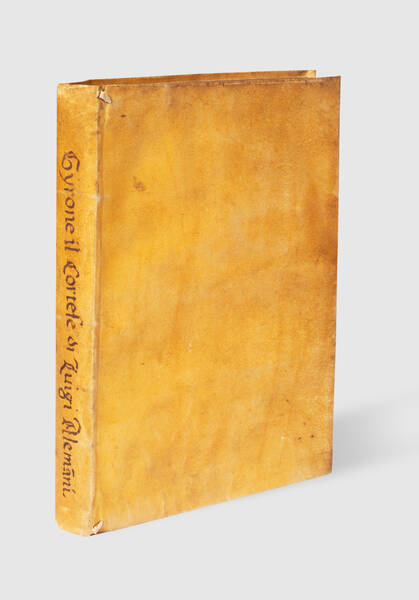
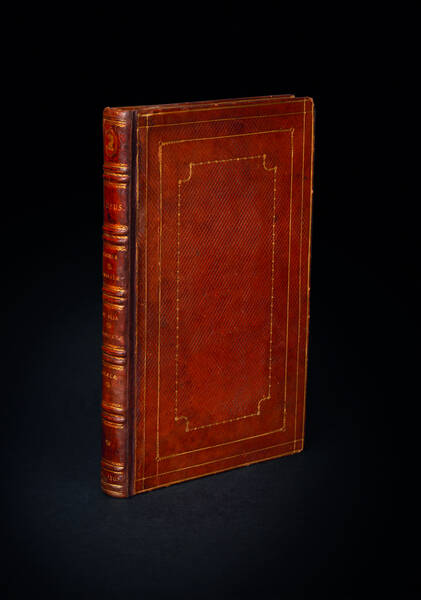
AESOP
Vita & fabellae Aesopi cum interpretatione Latina ... Gabriae Fabellae tres & quadraginta ... Phurnutus seu, ut alii, Curnutus De natura deorum....
€ 35.000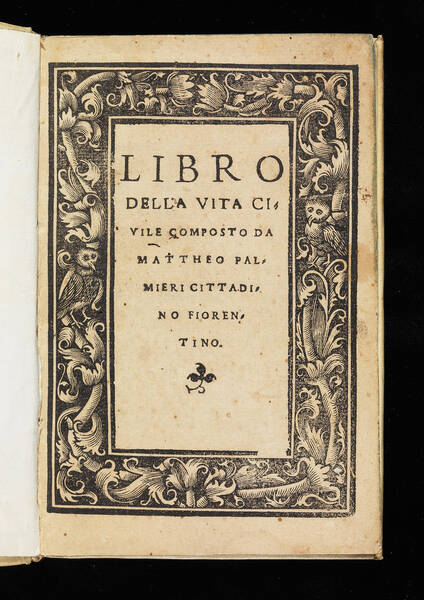
PALMIERI, Matteo
Libro della vita civile composta da Mattheo Palmieri cittadino fiorentino.
SOLD OUT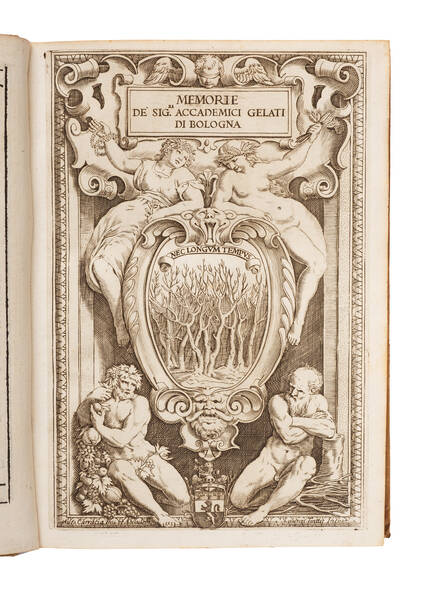
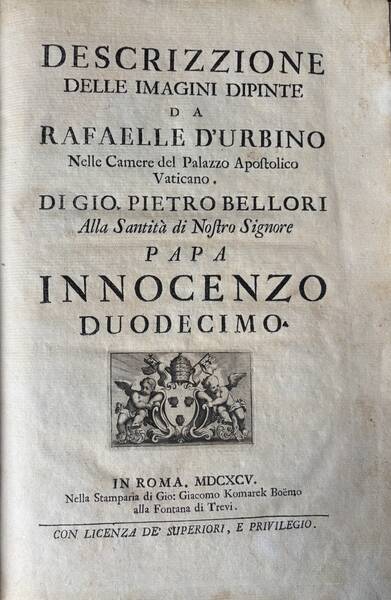
BELLORI, Giovanni Pietro
Descrizzione delle immagini dipinte da Rafaelle d'Urbino nelle camere del palazzo Apostolico Vaticano.
€ 2.500
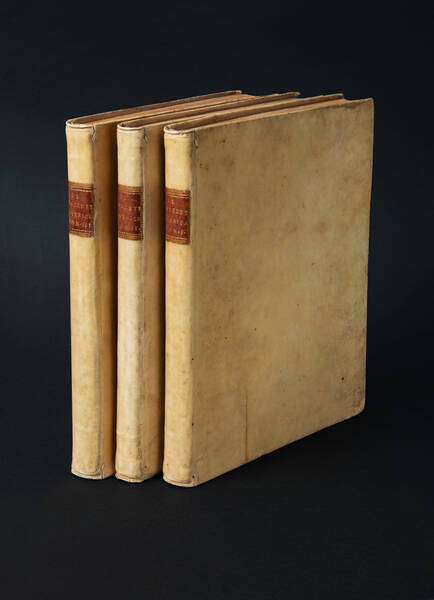
GAZZETTIERE AMERICANO
Il Gazzettiere Americano, contenente un distinto Ragguaglio di Tutte le Parti del Nuovo Mondo.
SOLD OUT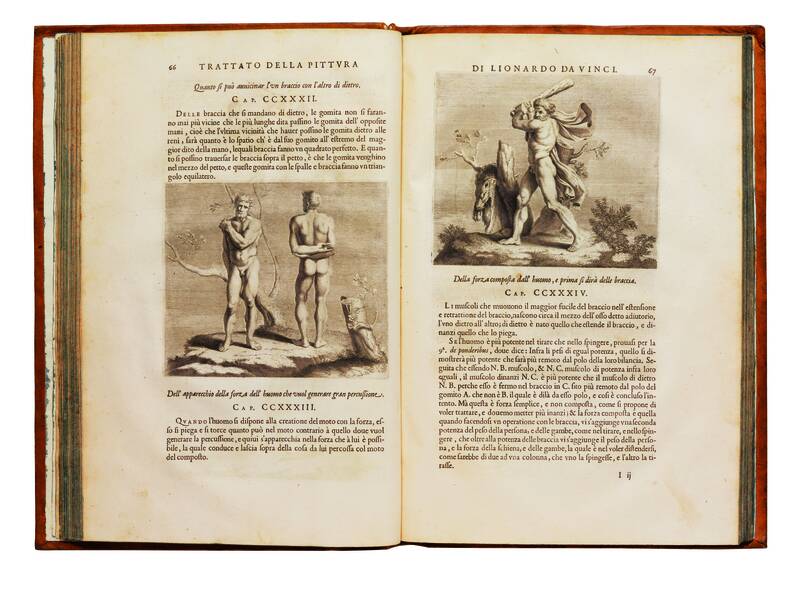
LEONARDO DA VINCI
Trattato della Pittura di Lionardo da Vinci, Nouamente dato in luce, con la vita dell’istesso autore, scritta da Rafaelle Du Fresne. Si sono giunti i...
SOLD OUT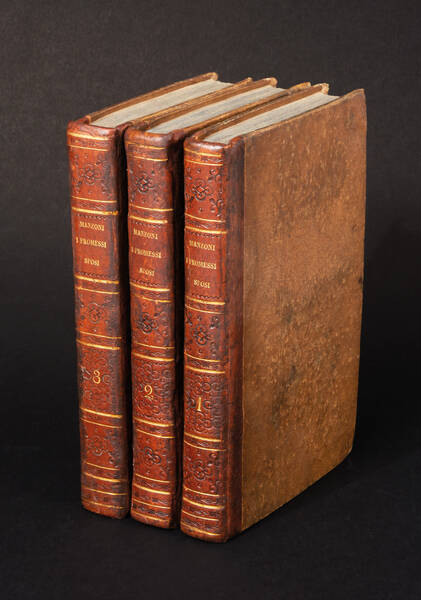
MANZONI, Alessandro
I promessi sposi, storia milanese del secolo XVII scoperta e rifatta da Alessandro Manzoni.
€ 11.500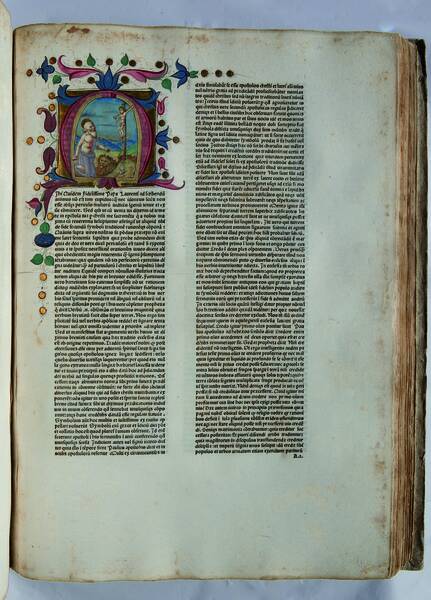
![[De Architectura libri decem], M. Vitruuius per Iocundum solito castigatior factus cum figuris et tabula vt iam legi et intelligi possit.](https://www.medariquier.com/typo3temp/pics/b57e48f107.jpg "[De Architectura libri decem], M. Vitruuius per Iocundum solito castigatior factus cum figuris et tabula vt iam legi et intelligi possit.")
VITRUVIUS POLLIO, Marcus
[De Architectura libri decem], M. Vitruuius per Iocundum solito castigatior factus cum figuris et tabula vt iam legi et intelligi possit.
SOLD OUT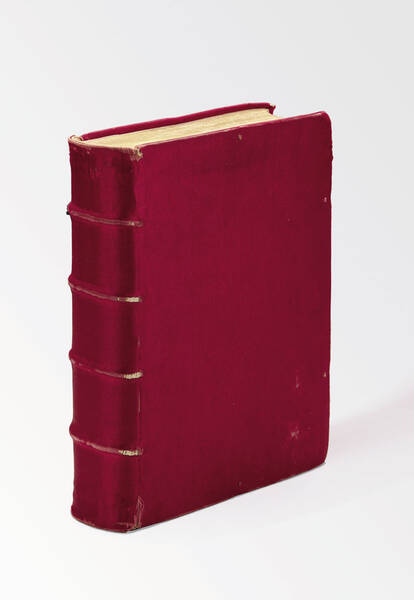
SANSOVINO, Francesco
Venetia città nobilissima et singolare, Descritta in XIIII libri da M. Francesco Sansovino
SOLD OUT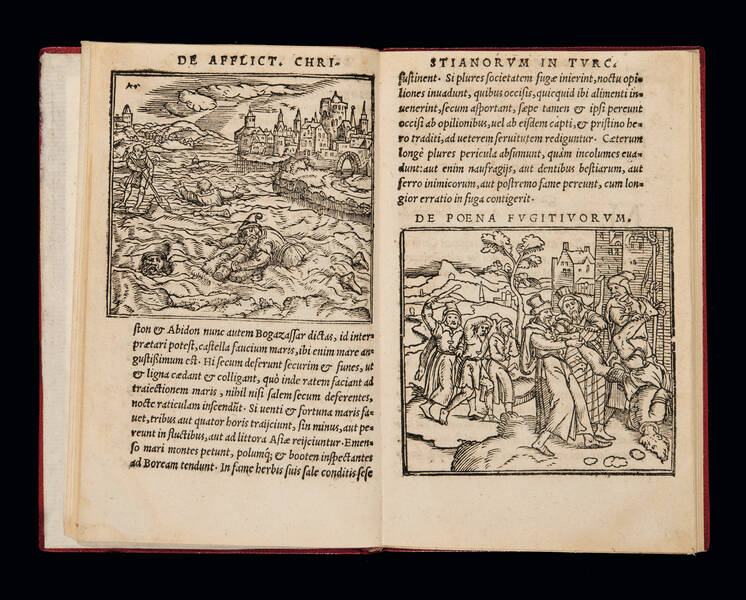

MEDA RIQUIER rare books ltd.
4 Bury Street St James's
SW1Y 6AB London
Phone +44 (0) 7770457377
info@medariquier.com