BESSON, Jacques. Theatrum instrumentorum et machinarum.
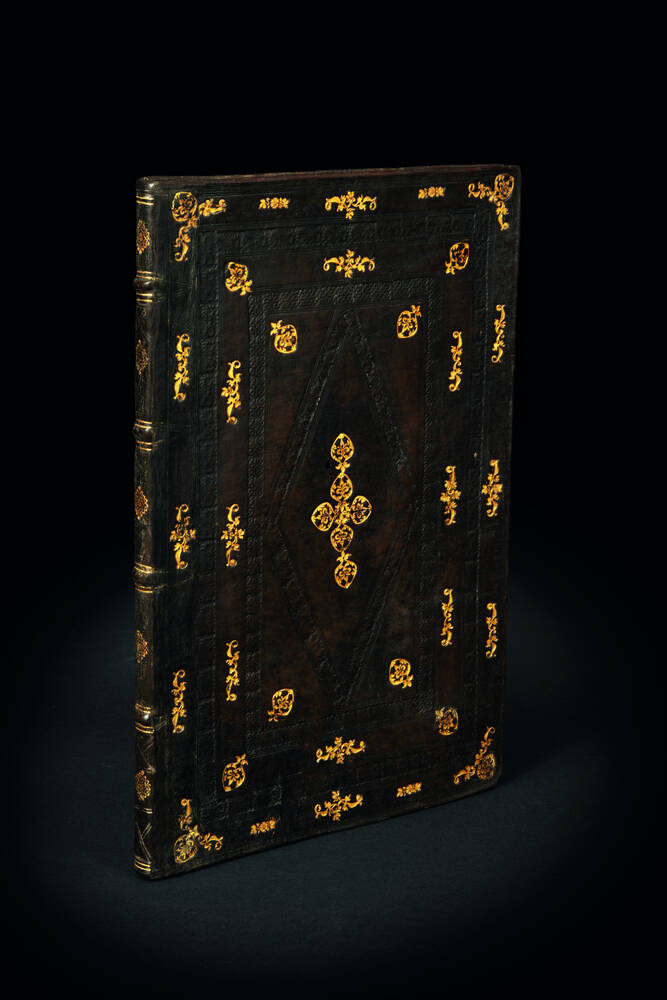
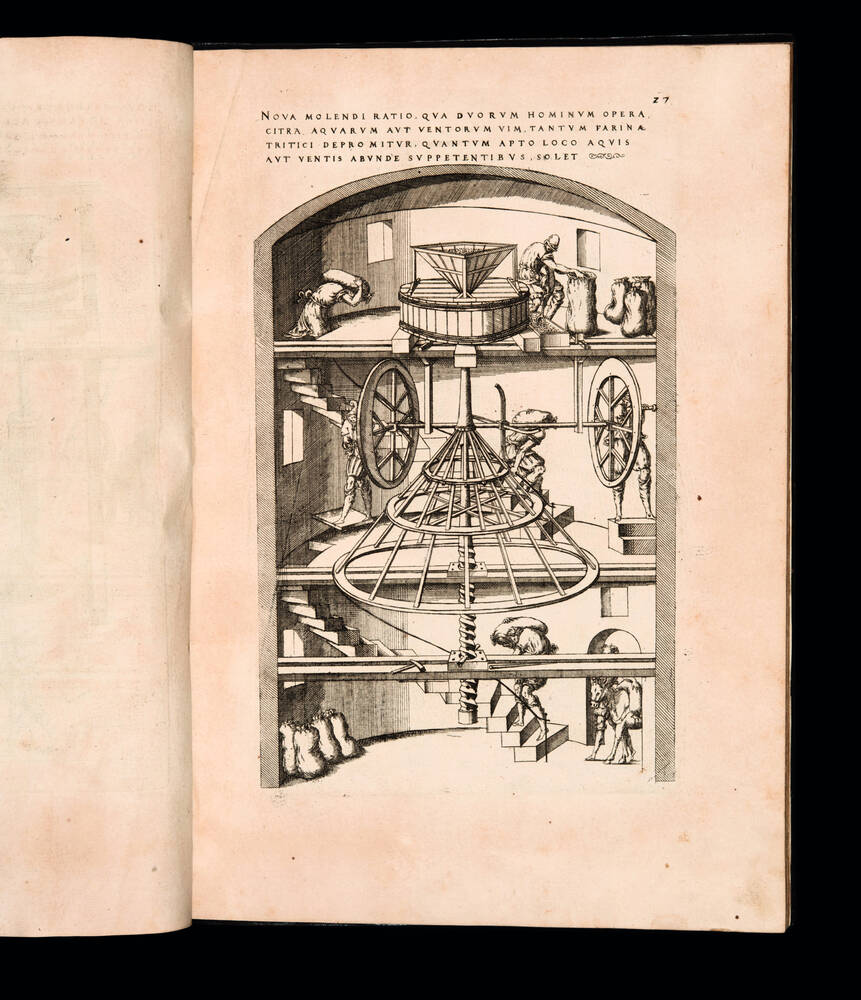
Lyon, Barthélemy Vincent., 1578.Folio (405×275mm). [12] leaves (the last blank), 60 plates. Title-page within architectural border. "Full-page diagram on leaf A3r. Following the first edition in format, the work consists of preliminary text and sixty numbered engraved plates with brief descriptive text engraved at the head of each. In this edition, plates 17, 35, 39, and 51 have been replaced by copies signed with the monogram of René Boyvin. Elaborate grotesque headpieces, tailpieces, and initials, and roman and italic letter in preliminary leaves" (Mortimer). Contemporary French dark brown morocco binding, covers with two concentric roll-tooled blind borders, blind lozenge border formed with a floral roll tool in central panel, decorated with gilt arabesque and fleur-de-lys tools; spine in compartments decorated with gilt geometric tools; gilt edges, lacking two pairs of ties. Title-page and a few leaves slightly browned; minor tear to lower corner of plate 10; else a very good, tall copy.
First Latin edition, the third edition overall, of the first ever "theatre of machines", and one of the most important sixteenth-century treatises on mechanical engineering. It includes 60 full-page engraved illustrations of a great variety of machines and instruments, each accompanied by a brief Latin description by François Béroalde de Verville. Alongside instruments such as compasses and rulers, Besson presents pumping stations for irrigation, cranes, lathes, mills, carriages, a loom, a threading tool, a fire engine and many other machines with manual, animal or hydraulic propulsion. Overall, the treatise shares a combination of significant scientific inventions and innovations, as well as some theoretical but impractical fantasies that Besson had envisioned as being possible to build, such as a device for lifting shipwrecks: this was really the first time that fantastical and conceptual machines had been represented in print. Jacques Besson "described himself as 'of Colombières, near Briançon' in the Dauphiné, […] but nothing else is known of his origin and early upbringing. […] Besson tells us that his own teacher was Pierre de Montdoré, known for a translation of the twelfth book Euclid's Elements, and that he himself was already teaching mathematics at Paris in the early 1550s, but the first confirmatory note we have of his activities comes in 1557, when the City Council of Lausanne made a payment of two crowns to 'Jacques Besson the engineer, both for the water-engine delivered to their lordships, and as a first instalment for the designing of fountains'. […] He turns up again two years later in Geneva, where he was granted right of residence in 1559, and citizenship free of charge in March 1561 for services rendered in teaching the art and science of mathematics. While in Switzerland he published his first book, a chemical work on practical distilling, with a preface recommending him to the public by Conrad Gesner. […] We soon find him back in France, at Rouen in 1563, at Paris in 1565, at Orléans in 1567, teaching mathematics and demonstrating his wonderful inventions to an admiring audience. When his mathematical instrument, the cosmolabe, was pirated in 1567, he rushed back to Paris and published his own version, dedicated to Queen Catherine de Medici. In it he speaks of several of his other inventions; including the apparatus for raising sunken wrecks, and a sort of crude microscope, which was to be published in his great work. Even in Gesner's preface to his book of 1559, he had been portrayed as pre-eminently a deviser of wonderful machines, and he now began to seek an opportunity of showing them to a wider public. In June 1569 King Charles IX came to Orléans. […] [Besson] presented himself before Charles and followed him back to Paris, as 'master of the King's engines'. Whether this involved more than the production of a great many designs for engines which were never tried out or put into practice we do not know. However, he must somehow have persuaded Charles to give him the money to publish his book of machines, which […] was dedicated to the king. It must have been done in a great hurry, for there is no proper description of the machines, only a Latin caption above each one and a French list of contents at the beginning; even the name of the printer is omitted. The reason can perhaps be guessed. The political situation had not been getting any better: in 1572 it broke, in the Massacre of St. Bartholomew. Besson managed somehow to survive, but France had become too dangerous for Protestants, even with royal patronage. […] At all events, he turned instead to London, and died there in 1573, unknown to the world" (Keller, pp. 7–8). The first, French edition of the Theatrum, titled Livre premier des instruments mathematiques, et méchaniques, servant à l'intelligence de plusieurs choses difficiles et necessaires à toutes Republiques, bears no date or place of publication but was likely printed in Orléans in 1569. Three subsequent, posthumous editions were printed in 1578: a bilingual French-Latin edition; a Latin-only edition with expanded captions for each plate; and a French-only edition. The unsigned plates are the same as those in the first edition and were engraved by the architect Jacques Androuet de Cerceau, except for plates 17, 35, 39 and 51, which are copies by René Boyvin. Several reprints in French, Italian, German, Latin and Spanish appeared in the following decades, attesting to the positive reception of Besson's treatise and its importance. This treatise is the first ever in the genre of the theatrum machinarum, through which technicians and engineers promoted their innovations to the general public, asserted their status, and, above all, sought recognition from potential patrons. Numerous theatres of machines were produced over the following 200 years, primarily in Italy, France, Germany and the Netherlands. Lavishly illustrated, these books introduced the latest and most intriguing technical innovations, providing technology with a new channel through which to spread beyond the narrow circle of specialists, but were also useful to inventors themselves to protect their rights to their inventions.
Cicognara 884; Mortimer French 58; Keller, Alexander. A Theatre of Machines. London: Chapman & Hall, 1965; Ravier, Benjamin. "Voir et concevoir: les théâtres de machines (XVIe-XVIIIe siècle)" (PhD diss., Panthéon-Sorbonne University, Paris, 2013).
Other Books
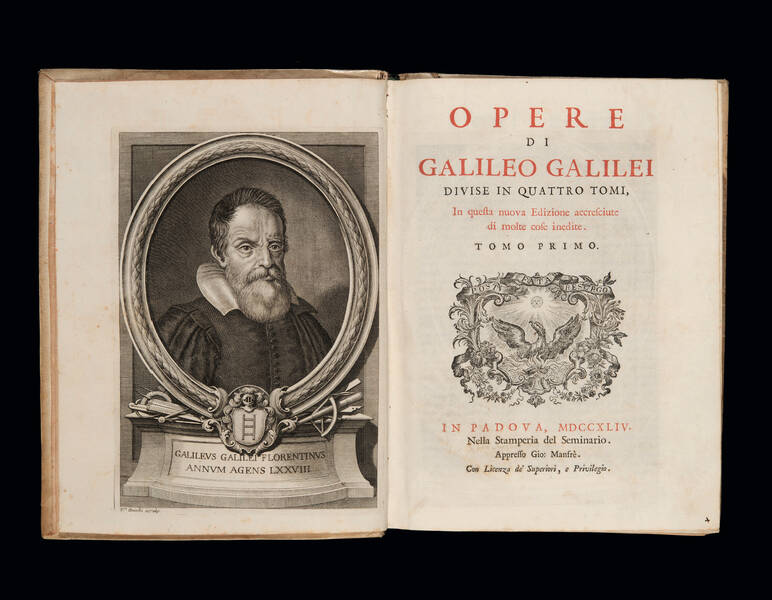
GALILEI, Galileo
Opere, divise in quattro tomi, in questa nuova edizione accresciute de molti cose inedite.
SOLD OUT
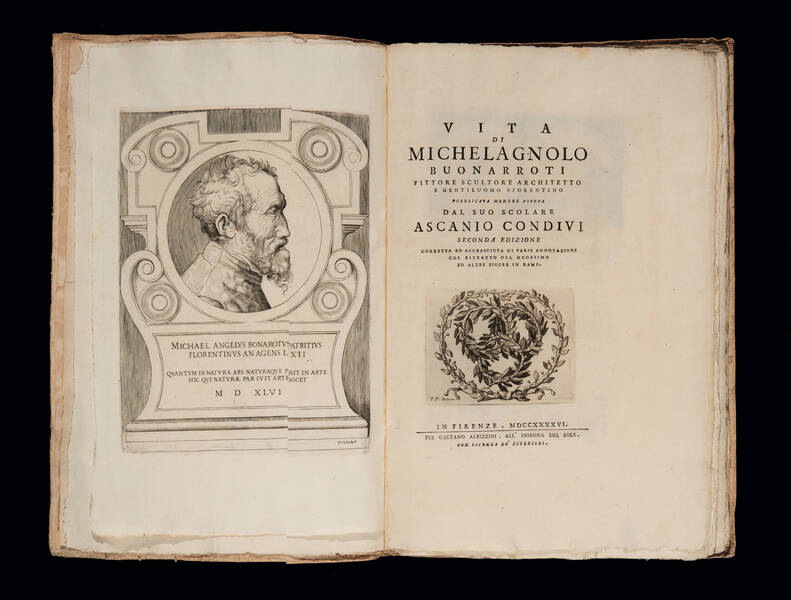
CONDIVI, Ascanio
Vita di Michelagnolo Buonarroti pittore scultore architetto e gentiluomo fiorentino pubblicata mentre viveva dal suo scolare Ascanio Condivi.
SOLD OUT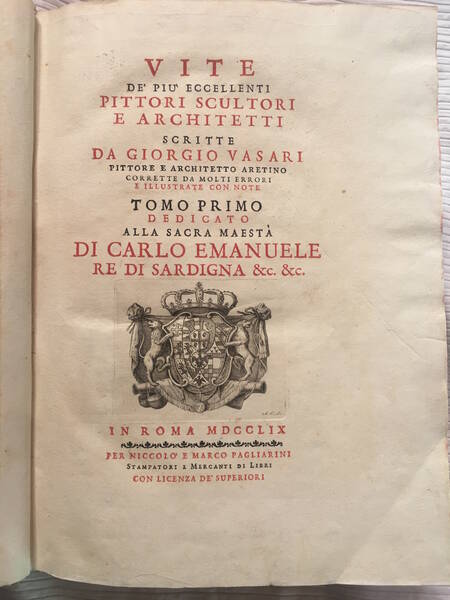
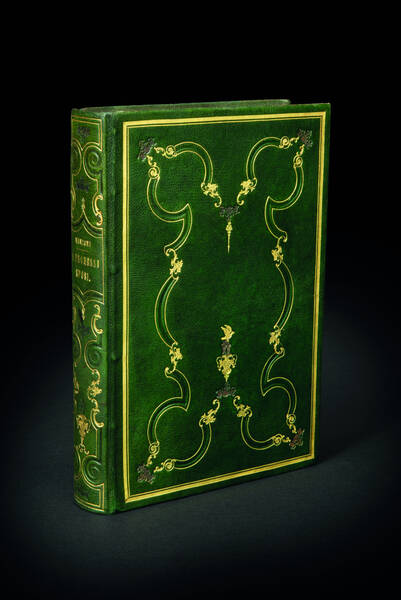
MANZONI, Alessandro; VERRI, Pietro
I promessi sposi, storia milanese del secolo XVII. Storia della colonna infame inedita. Sulla tortura e singolarmente sugli effetti che produsse...
SOLD OUT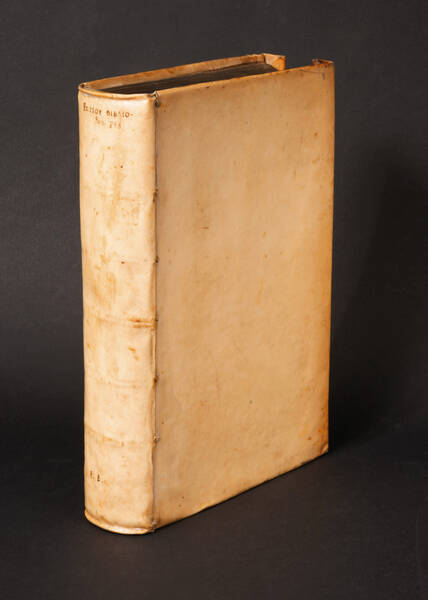
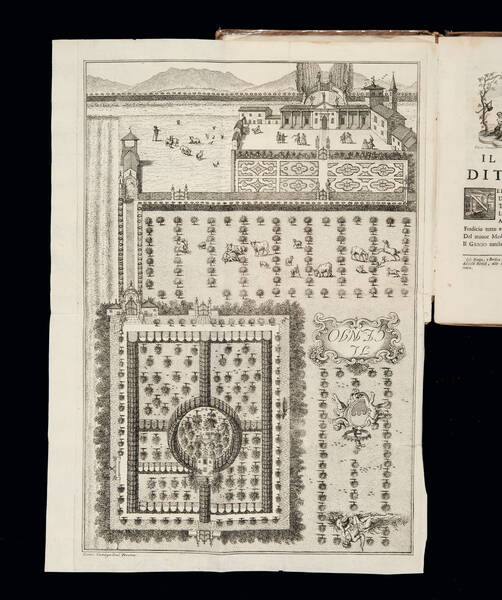
ACANTI, Aureliano (CANATI, Valeriano)
Il Roccolo ditirambo di Valeriano Acanti Acc. Olimpico Vicentino.
€ 5.000
CARIOLA, Antonio; DOINO, Caterino
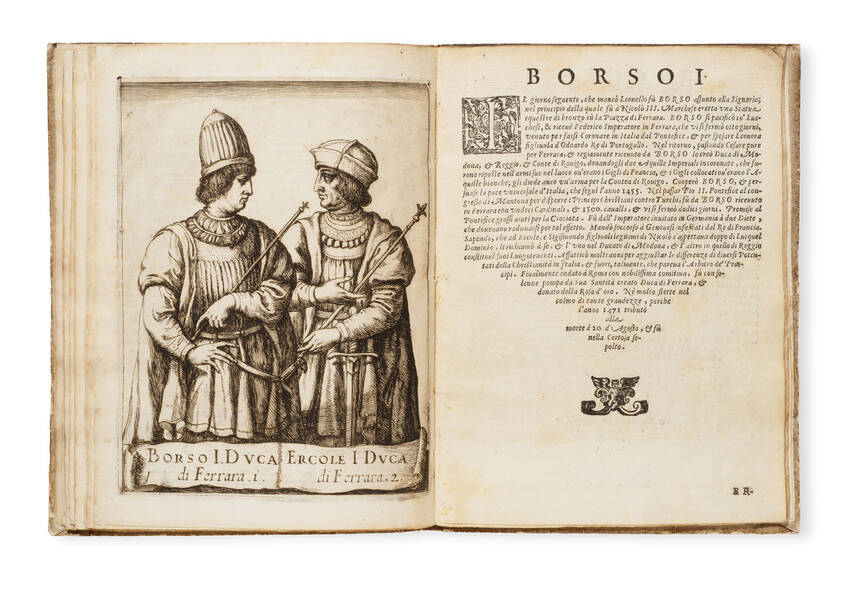
Ritratti de ser.mi Principi D’Este sig.ri di Ferrara con l’aggionta de loro fatti più memorabili ridotti in sommario.
SOLD OUT
ZOCCHI, Giuseppe
Scelta di XXIV vedute delle principali contrade, piazze, chiese, e palazzi della citta di Firenze.
€ 45.000
MACHIAVELLI, Niccolò
Libro della Arte della guerra di Niccolò Machiavegli cittadino et segretario fiorentino.
SOLD OUT
MEDA RIQUIER rare books ltd.
4 Bury Street St James's
SW1Y 6AB London
Phone +44 (0) 7770457377
info@medariquier.com