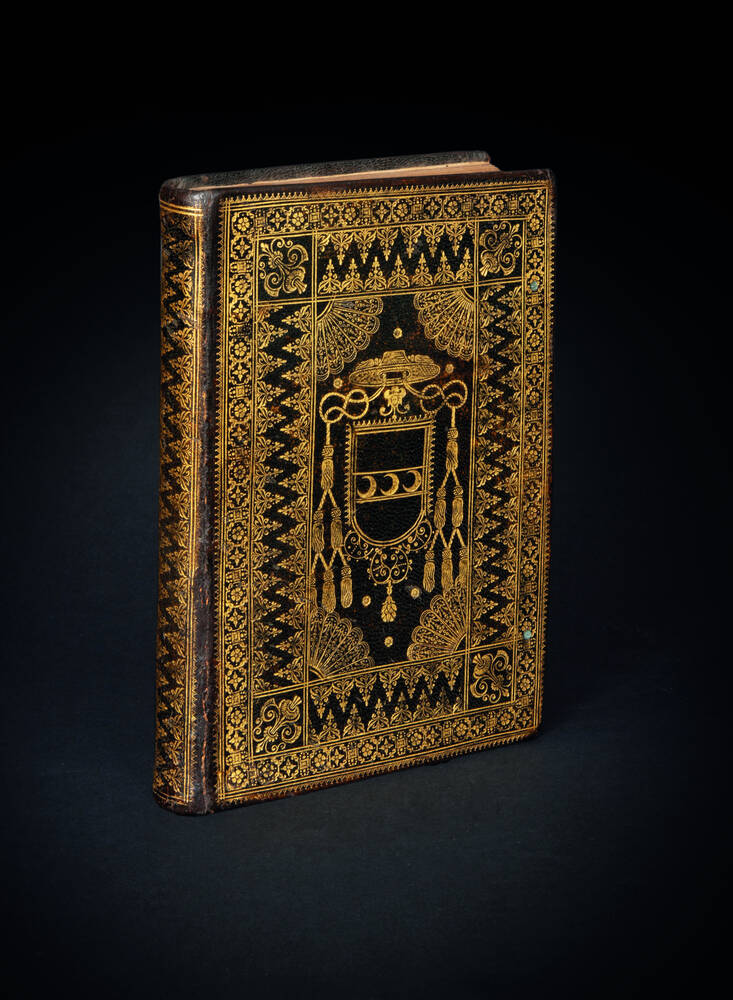
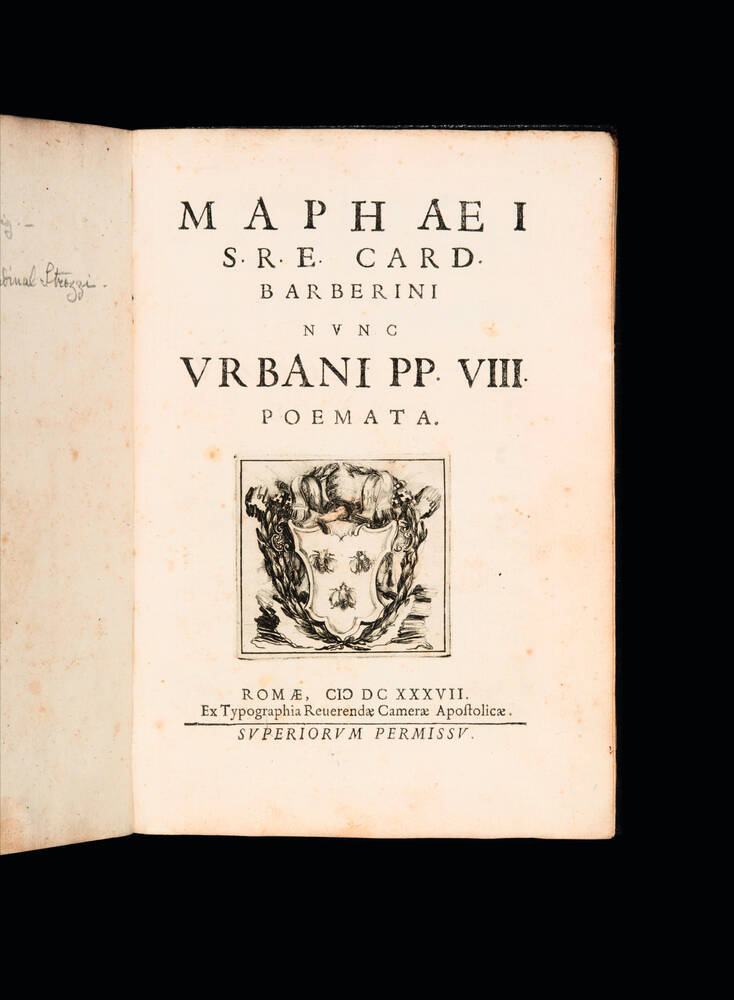
BARBERINI, Maffeo. [POPE URBAN VIII].. Poemata. Poesie toscane.
Rome, ex typographia reverendae camerae Apostolicae., 1637.Quarto (211×145mm), two works bound together. I: [10] leaves, 231; [1 errata] pages. II: [7] leaves; 106 pages, [1] errata leaf. Title-pages with engraved arms of Pope Urban VIII. Engraved headpieces and tailpieces throughout. Contemporary Roman black morocco binding by the Andreoli bindery: two concentric borders separated by double fillets, the outer border with roll of stylised flowers and leafy branches and the broader, internal border with alternating triangular tools and with arabesque tools in the corners; alternating triangular tools on spine; central panel with four fan corner-pieces and the arms of Leone Strozzi (1637–1703), Bishop of Pistoia and Prato and, from 1700, Archbishop of Florence. In a modern box. Early annotations on endpapers, few spots. A very good copy from the library of Francesco Riccardi del Vernaccia (1794–1863), chamberlain of the Grand Duke of Tuscany Ferdinand III (ex-libris).
Two rare collections of poetry by Pope Urban VIII, born Maffeo Barberini (1568–1644). The first collected edition of Barberini's poems was printed in Paris in 1621. Despite him being elected pope in 1623, "it took till 1631 before the first Roman edition appeared, with the Vatican Press. […] In the same year, a smaller, and therefore supposedly cheaper but yet identical version was published by the press attached to the Apostolic Chamber; this, of course, was the press that usually catered to the people of Rome and of the Papal States and therefore could be instrumental in distributing the book to those teachers who expressed an interest in using it in their classes." (Rietbergen, p. 113) "In a papal brief titled Poesis probis et piis ornata documentis primaevo decori restituenda, that would precede the text of all subsequent Roman editions, he […] maintained […] that poetry should be restored to its pristine quality, turning its back on pagan themes and images and instead inciting to Christian virtues. Still, sometimes it might be necessary to use classical elements to direct the reader to biblical texts and their messages, or to moral examples. […] Not only was the official Roman edition constantly re-issued, it also was constantly enlarged, as the Pope's poetic vein continued to flow. Indeed, almost each new edition contained additional, mostly Latin poems […]. From 1635 onwards, the Roman editions of Urban's Latin poems mostly were followed by editions of his Italian verses as well […]. The purpose of the poems now published was manifestly didactic, since most are provided with explanatory captions. All Urban's favourite themes recur: the moral education of the members of his family—various Latin poems for the Pope's brothers and nephews […]—the cult of poverty, expressed in a sonnet [II, 69] on St. Francis, and the prayer- like meditations." (ibid., pp. 114, 115) "As the years went by, the number of printed editions of the papal poems increased. Obviously, the two main presses of Rome, that of the Vatican and of the Apostolic Chamber, re-issued their editions, quite probably on express papal orders but also because a genuine demand for them must have sprung up all over the Roman Catholic world." (ibid., p. 118) "Maffeo Barberini was born on April 5, 1568 as the youngest of the six sons of Antonio Barberini and Camilla Barbadori, who were citizens of Florence. Young Maffeo was first sent to school with the Florentine Jesuits and then, in 1584, moved to Rome to live under the tutelage of his uncle Francesco. In Rome, too, he was schooled in the humanistic curriculum of the Jesuits, in their famous Collegio Romano. Despite his obvious cultural interests, the career mapped out for a young man of his social background demanded that he go on to university to study for a law degree. This he did, at Pisa, where he spent several years. Though he wanted to marry, nothing came of the match arranged for him by his mother. Therefore he returned to Rome in 1588, to seek a career in the Church. With the initial aid of his uncle he soon succeeded, gaining one position after the other and thus moving upwards in the hierarchy of the Curia. The life he had started in 1588 found its culmination in 1623, with his election to the papacy.” (ibid., pp. 97–98) Urban VIII was the longest-reigning pope of the XVII century, ruling until his death in July 1644. His papacy was marked by the Galileo affair, with the Florentine scientist being condemned by the Roman Inquisition in 1632, as well as his patronage of major Baroque artists such as Gian Lorenzo Bernini, Francesco Borromini and Pietro da Cortona. It is interesting to note that "poetry may well have been Maffeo Barberini's first and most important inclination." (ibid., p. 96) "Maffeo Barberini […] was a poet before he could even think to aspire after the papacy. As pope, he continued to be a poet. Rather than, only, expressing a personal aesthetic in his poetry, he used it as the powerful means it was precisely to propagate his deepest convictions and feelings." (ibid., p. 136). "Maffeo's poetic compositions […] can and should be read as a running commentary on many of the issues he had to confront, on many of the actions he did take; they even seem to suggest a unity of thought that may help to give meaning to a number of his deeds and, moreover, point to a surprising consistency and continuity in his policy." (ibid., p. 97)
I: USTC 4012404. II: USTC 4012403. Rietbergen, Peter. Power and Religion in Baroque Rome: Barberini Cultural Policies. Leiden-Boston: Brill, 2006.
Other Books
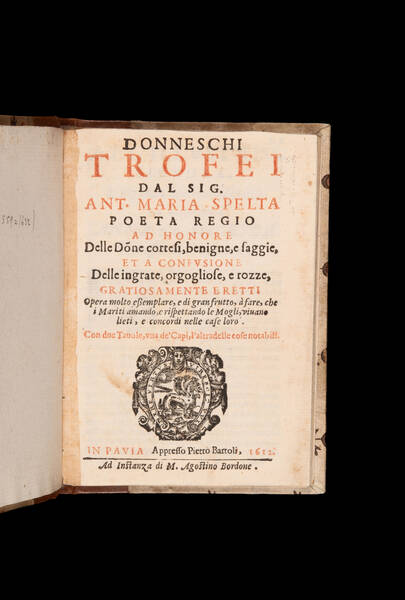
SPELTA, Antonio Maria
Donneschi trofei … ad honore delle donne cortesi, benigne, e saggie, et a confusione delle ingrate, orgogliose, e rozze, gratiosamente eretti. Opera...
€ 3.000
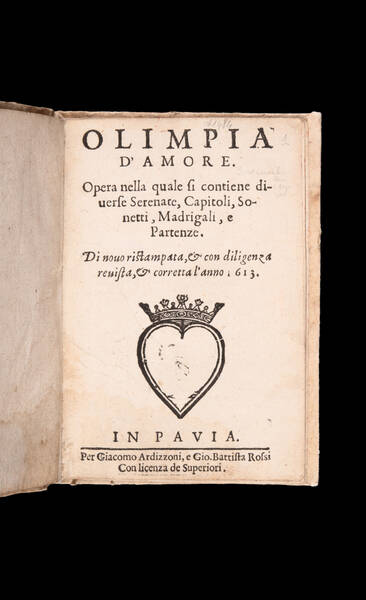
[ALESSANDRI, Baldassarre Olimpo]
Olimpia d'amore. Opera nella quale si contiene diverse serenate, capitoli, sonetti, madrigali e partenze.
€ 800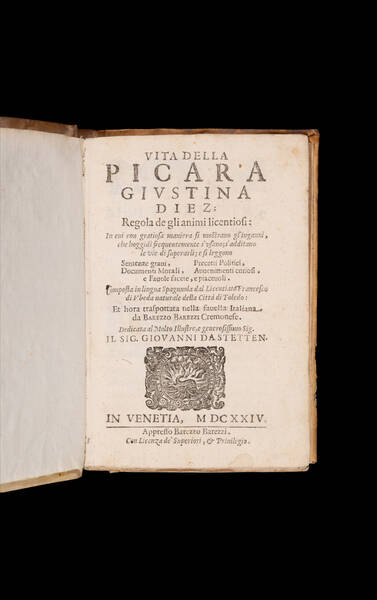
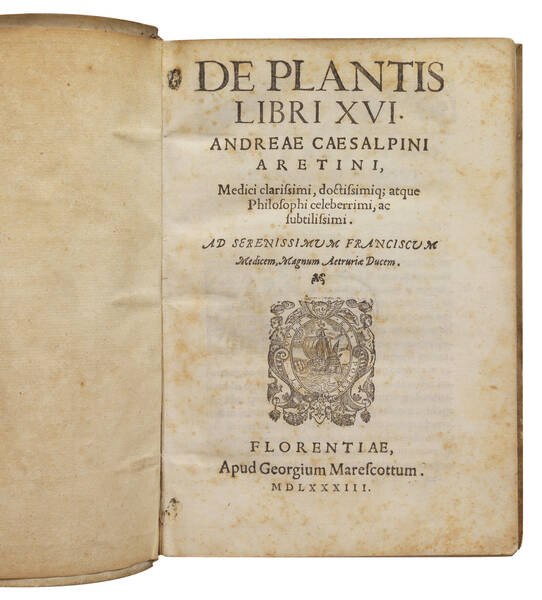
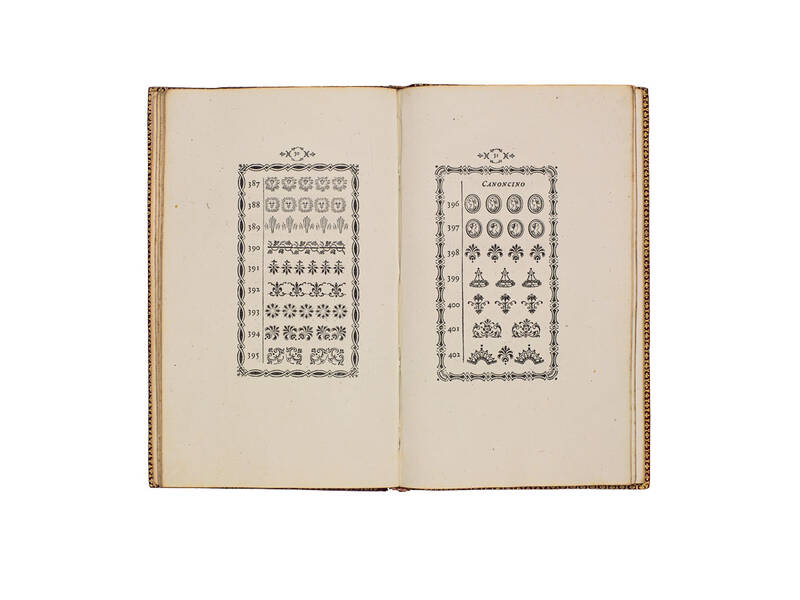
[BODONI]
Fregi e Majuscole incise e fuse da Giambattista Bodoni direttore della Stamperia Reale
SOLD OUT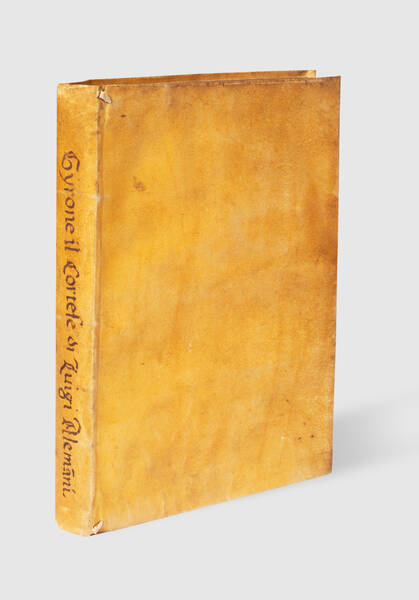
![[The Commentaries.] C. Julii Cæsaris Quae Extant. Accuratissimè cum Libris Editis & MSS optimis Collata, Recognita & Correcta. Accesserunt Annotationes Samuelis Clarke. S.T.P. Item Indices Locorum, Rerumque & Verborum Utilissimæ. Tabulis Æneis Ornata.](https://www.medariquier.com/typo3temp/pics/e0a4828aa4.jpeg "[The Commentaries.] C. Julii Cæsaris Quae Extant. Accuratissimè cum Libris Editis & MSS optimis Collata, Recognita & Correcta. Accesserunt Annotationes Samuelis Clarke. S.T.P. Item Indices Locorum, Rerumque & Verborum Utilissimæ. Tabulis Æneis Ornata.")
CAESAR, Gaius Julius
[The Commentaries.] C. Julii Cæsaris Quae Extant. Accuratissimè cum Libris Editis & MSS optimis Collata, Recognita & Correcta. Accesserunt...
€ 20.000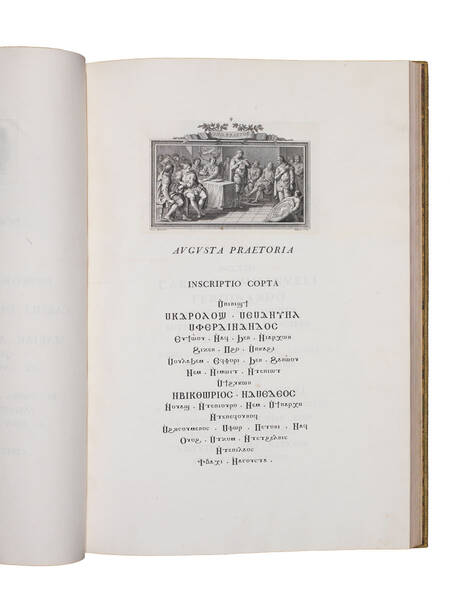
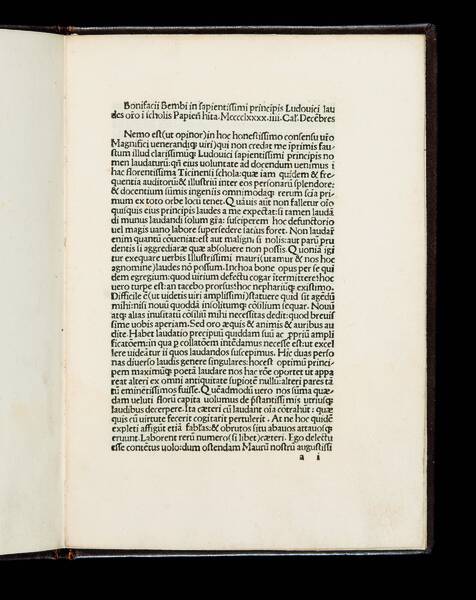
BEMBO, Bonifacio
In sapientissimi principis Ludovici laudes or(ati)o i(n) scholis Papien(sibus) h(ab)ita.
SOLD OUT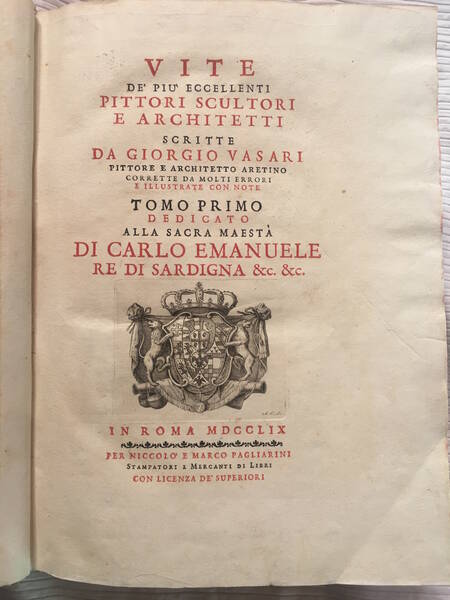
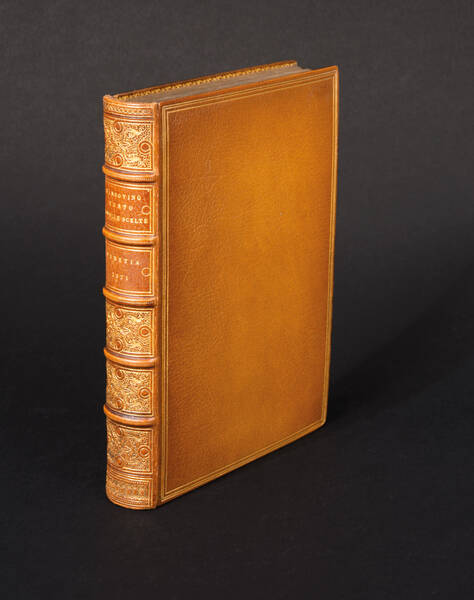
SANSOVINO, Francesco
Cento nouelle scelte da piu nobili scrittori della lingua volgare, con l'aggiunta di cento altre nouelle antiche, non pur belle per inuentione, ma...
€ 3.600![La prima [seconda] parte de ragionamenti. Commento di ser Agresto da Ficaruolo, sopra la prima ficata del padre Siceo. Con la diceria de nasi.](https://www.medariquier.com/typo3temp/pics/00eb26b1e7.jpg "La prima [seconda] parte de ragionamenti. Commento di ser Agresto da Ficaruolo, sopra la prima ficata del padre Siceo. Con la diceria de nasi.")
ARETINO, Pietro; CARO, Annibale
La prima [seconda] parte de ragionamenti. Commento di ser Agresto da Ficaruolo, sopra la prima ficata del padre Siceo. Con la diceria de nasi.
€ 3.000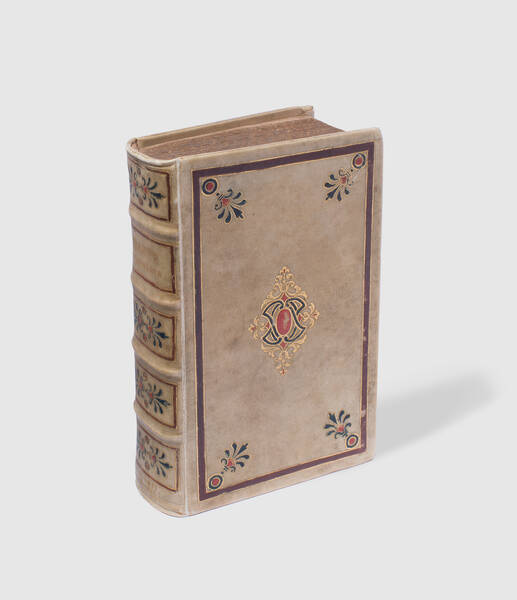
ALIGHIERI, Dante
Commedia di Dante insieme con vno dialogo circa el sito forma et misure dello Inferno.
SOLD OUT![MORE, Sir Thomas. De optimo reip. statu deque nova insula Utopia ... Epigrammata [with:]
DESIDERIUS ERASMUS. Epigrammata.](https://www.medariquier.com/typo3temp/pics/9344bb41f5.jpg "MORE, Sir Thomas. De optimo reip. statu deque nova insula Utopia ... Epigrammata [with:]
DESIDERIUS ERASMUS. Epigrammata.")
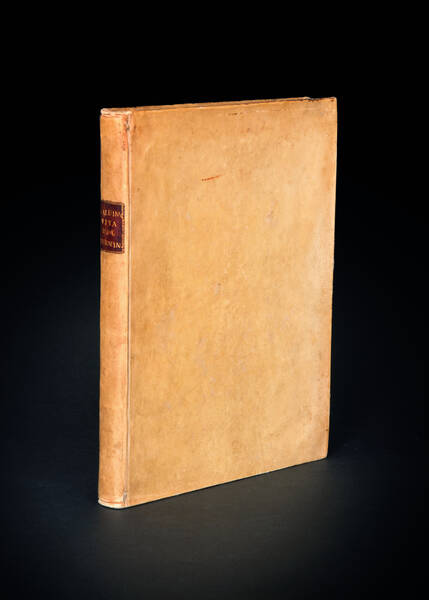
MORE, Sir Thomas; DESIDERIUS ERASMUS
MORE, Sir Thomas. De optimo reip. statu deque nova insula Utopia ... Epigrammata [with:] DESIDERIUS ERASMUS. Epigrammata.
€ 50.000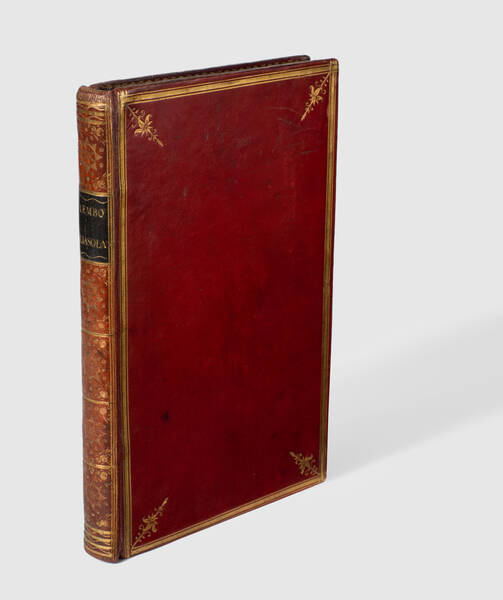
MEDA RIQUIER rare books ltd.
4 Bury Street St James's
SW1Y 6AB London
Phone +44 (0) 7770457377
info@medariquier.com