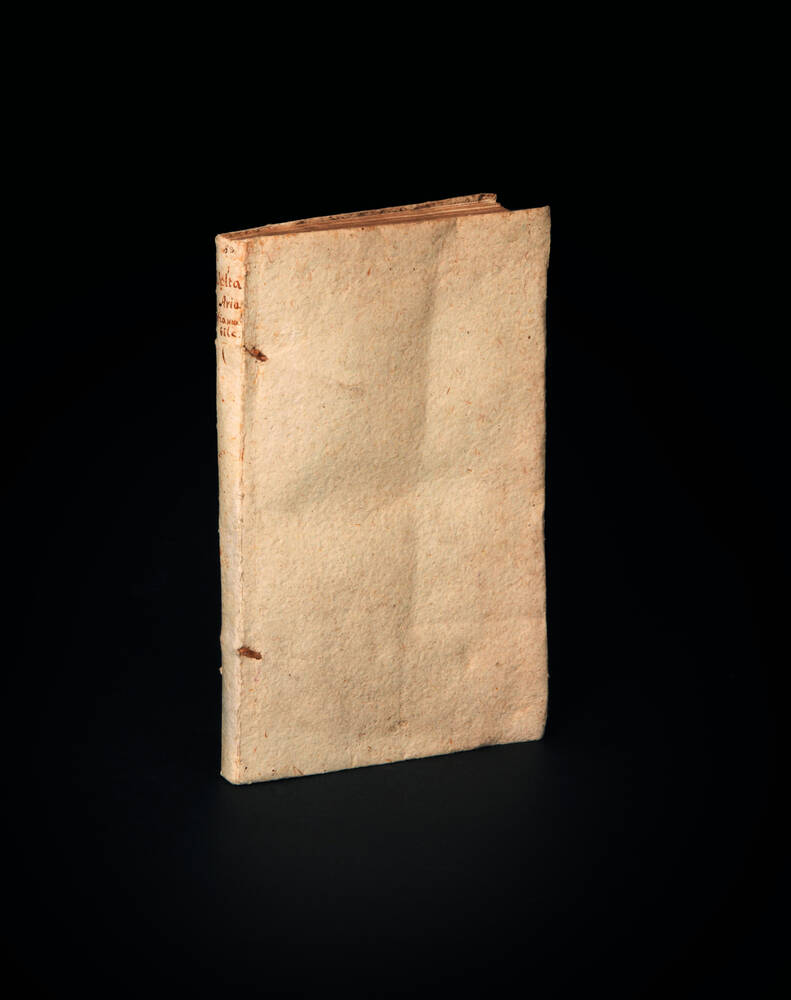
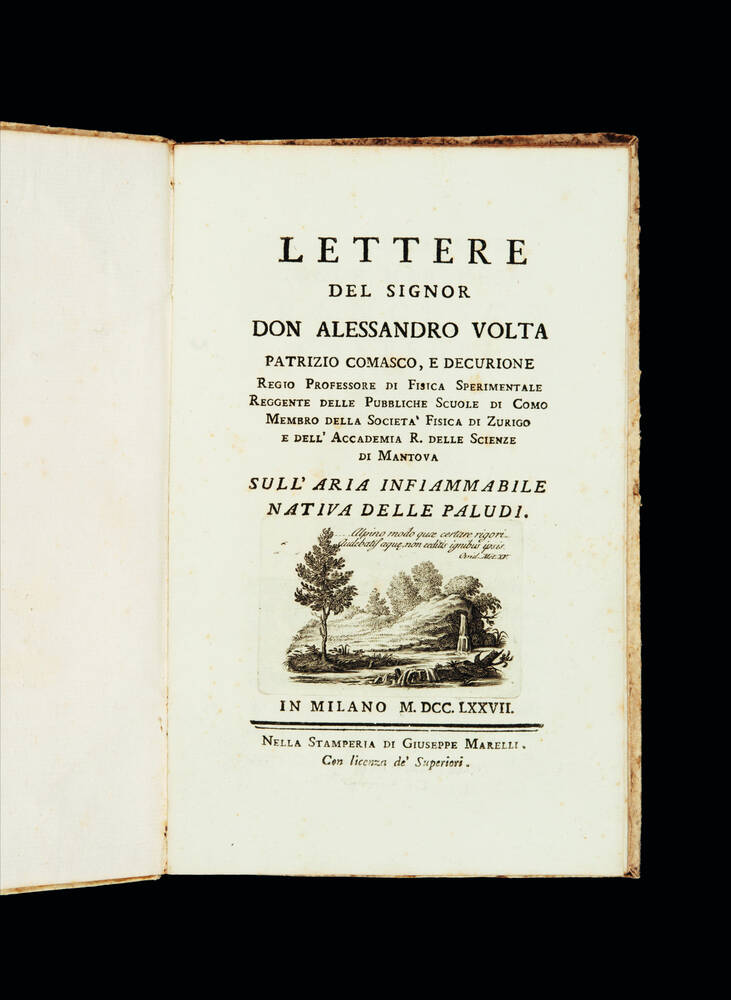
VOLTA, Alessandro. Lettere sull'aria infiammabile nativa delle paludi.
Milan, nella stamperia di Giuseppe Marelli., 1777.Octavo (200×130mm). 147, [3] pages. Several woodcut initials and 14 engravings throughout, some signed Ant. Longonus, including a vignette on title-page, the arms of the dedicatee Marquis Francesco Castelli on a2r and depictions of scientific experiments. A very fine copy in contemporary interim boards, manuscript title on spine. With the (sometimes-missing) last page.
First edition of seven letters by the Italian scientist Alessandro Volta describing his discovery of methane and the subsequent experiments he conducted. From a young age, Alessandro Volta (1745–1827) was a prominent figure among European scientists, particularly in the field of electricity. In 1799, he invented the battery, the first continuous source of electric current, which paved the way for the study of electrochemistry and electromagnetism. Volta was also interested in the chemistry of gases, or 'airs', as they were known at the time. In 1777, he became the first person to discover and isolate a substance that he termed 'inflammable marsh gas', now known as methane. It was a friend of Volta's, Father Carlo Giuseppe Campi — who had translated Benjamin Franklin's works into Italian in 1774 — who first drew his attention to the phenomenon of "a peculiar kind of air […] bubbling up from water found at the base of a hillside" (Holmes, p. 87). During a boat ride on Lake Maggiore, Volta observed the same phenomenon again and collected a sample of the gas. He described his discovery and the results of his research in a series of letters to Campi written between November 1776 and January 1777; these were collected and published in a volume that was soon translated into German and French. The translation of a letter from Joseph Priestley to Benjamin Franklin is also included. Volta immediately began experimenting with the substance he had discovered. "When he placed a candle at the mouth of a bottle containing the air, it burned slowly, with a lambent flame. The manner in which it burned persuaded him that it differed from the only previously known inflammable air, that obtained by dissolving metals in acids. Moreover, he soon found that it was 'more' inflammable than the ordinary inflammable air, because it would burn when mixed with a much larger proportion of common air than the former could. He gave the new air the neutral name, inflammable air native to marshes" (ibid.). From the end of the second letter onwards, Volta recounts the investigations into the ignition and flammability of this air he conducted to determine its properties and potential applications. He also distinguished it from other airs known at the time, such as "inflammable air" and "dephlogisticated air". Volta's discovery of methane was no accident. A few years before Volta's experiments on methane, the Scottish chemist Joseph Black had discovered carbon dioxide ('fixed air'), an event that sparked a widespread interest in the study of 'airs': following carbon dioxide, came the discoveries of oxygen ('dephlogisticated air') by Joseph Priestley and hydrogen ('flammable air') by Henry Cavendish. However, Volta and his contemporaries were still hampered by inadequate scientific terminology, as the understanding of the physical world was still partly tied to the alchemical tradition rooted in the ancient Greek doctrine of the four elements. The term 'gas', for example, had been coined by the Flemish chemist Jean Baptiste Van Helmont over a century earlier, yet 'air' was still widely used. Therefore, the idea that atmospheric air was a mixture of various gases rather than a simple, static element, as in the classical tradition, had yet to be universally accepted. More broadly, the distinction between elemental gases and mixtures remained unclear. Volta also adhered to the phlogiston theory of combustion, which was developed in the late XVII century and remained dominant until the end of the XVIII century. According to this theory, all flammable materials contained a substance called 'phlogiston', which was released into the air during combustion, leaving behind ash or calx. This theory was eventually superseded by Antoine-Laurent de Lavoisier's argument that combustion involves combining with oxygen rather than losing phlogiston. Volta was then unable to understand why the flammable air in a bottle would not ignite when a piece of charcoal was placed inside it, yet it would ignite when the charcoal was placed near the bottle's opening. This was, of course, because methane can only be ignited in the presence of atmospheric oxygen. When the coal was immersed in methane, it was suffocated by the lack of oxygen. Despite using largely invalid terminology and referencing ineffective concepts of the time, Volta correctly identified many of the fundamental aspects of methane. He recognised that it originates from the decomposition of organic matter, that it is present in marshes, and that it can be ignited by a burning candle. He also realised its explosive potential, and developed the electric eudiometer, a device for analysing gases. Volta's study on methane predated the work of both William Henry, who first wrote its formula in 1805, and of Marcellin Berthelot, who first synthesised methane in 1856. More broadly, Volta was a key contributor to the study of gases, which ultimately led to the so-called chemical revolution which dispelled the traditional alchemical understanding of matter. This culminated in Lavoisier's formulation of the principle of mass conservation at the end of the century — the event that marked the birth of modern chemistry.
Gadda, Carlo E. "Alessandro Volta e il metano."In Azoto e altri scritti di divulgazione scientifica, 215–223. Milan, Libri Scheiwiller, 1986; Holmes, Frederic L. 'Phlogiston in the Air.' In Nuova Voltiana: Studies on Volta and His Time, edited by F. Bevilaqua and L. Fregonese, vol. II, 73–113. Pavia, 2000.
Other Books
CONTILE, Luca
Ragionamento di Luca Contile sopra la proprietà delle imprese con le particolari de gli Academici Affidati et con le interpretationi et croniche.
€ 8.000
[BIBLIA ARABICA]
Evangelium Iesu Christi quemadmodum scripsit Mar Mattheus unus ex duodecim discipulis eius.
€ 11.000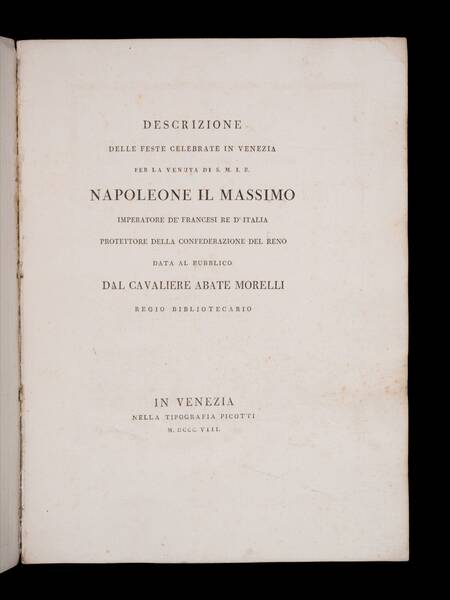
MORELLI, Jacopo
Descrizione delle feste celebrate in Venezia per la venuta di S.M.I.R. Napoleone il Massimo imperatore de' Francesi re d'Italia protettore della...
€ 1.500
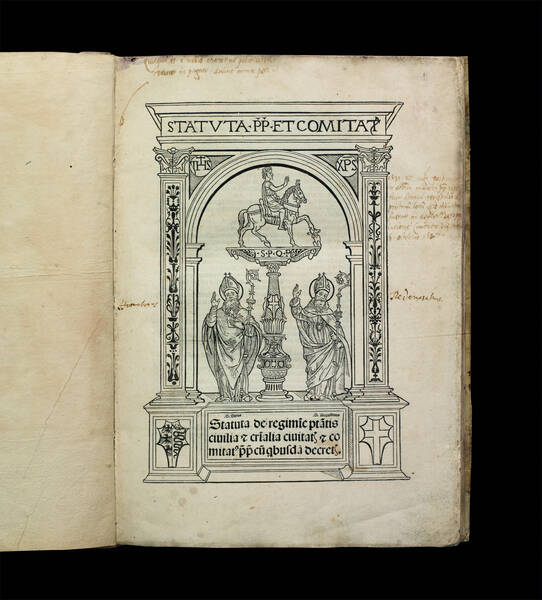
[PAVIA, Statuti]
Statuta Papiae et comitatus. Statuta de regimine potestatis ciuilia & criminalia ciuitatis & comitatus Papiae cum quibusdam decretis.
SOLD OUT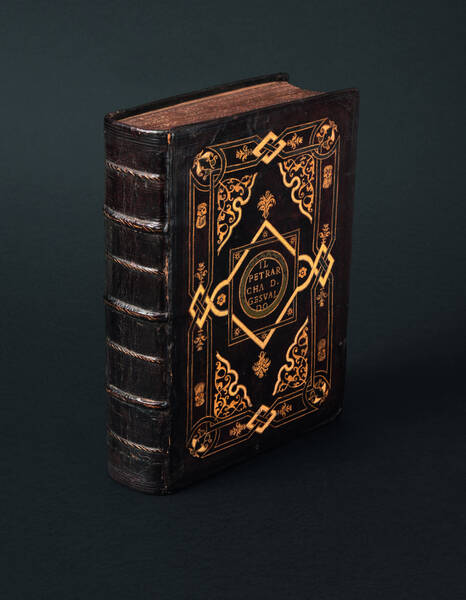
PETRARCA, Francesco
Il Petrarcha colla spositione di misser Giouanni Andrea Gesualdo. I Triomphi del Petrarcha colla spositione di misser Giouanni Andrea Gesualdo da...
SOLD OUT![Trattato della natura de’ cibi et del bere [...] nel quale non solo tutte le virtù, & i vitij di quelli minutamente si palesano; ma anco i rimedij per correggere i loro difetti copiosamente s’insegnano.](https://www.medariquier.com/typo3temp/pics/d4e0248596.jpeg "Trattato della natura de’ cibi et del bere [...] nel quale non solo tutte le virtù, & i vitij di quelli minutamente si palesano; ma anco i rimedij per correggere i loro difetti copiosamente s’insegnano.")
PISANELLI, Baldassarre
Trattato della natura de’ cibi et del bere [...] nel quale non solo tutte le virtù, & i vitij di quelli minutamente si palesano; ma anco i rimedij...
SOLD OUT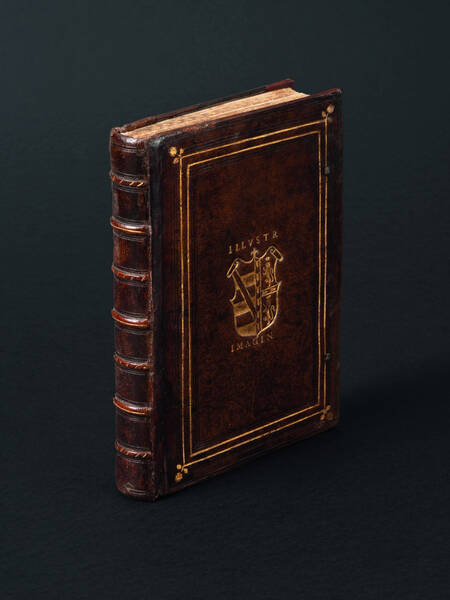
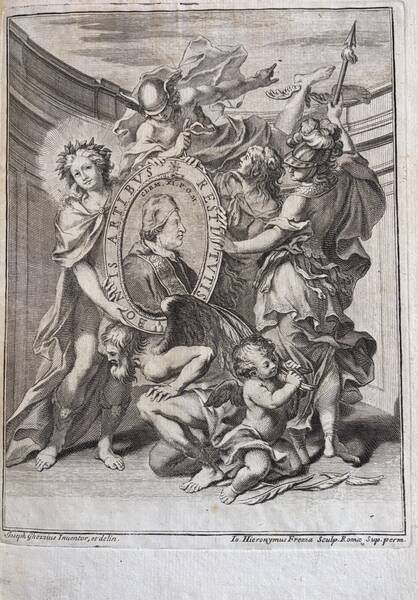
GHEZZI, Giuseppe
Roma tutrice delle belle arti, pittura, scultura, e architettura – mostrata nel Campidoglio dall'Accademia del disegno il dí 2. Ottobre 1710. Essendo...
€ 700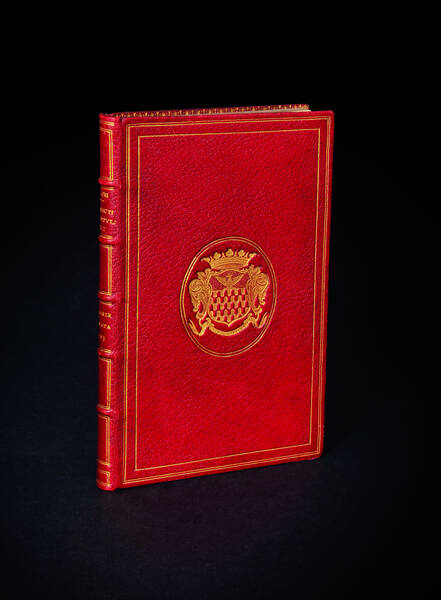
CEI, Francesco
Sonecti capituli canzone sextine, stanze et strambocti composti per lo excellentissimo Francescho Cei.
€ 3.000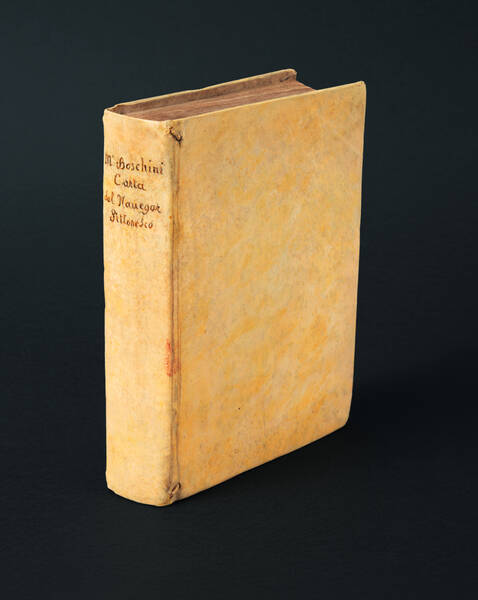
BOSCHINI, Marco
La carta del nauegar pitoresco dialogo tra vn senator venetian deletante, e vn professor de pitura, soto nome d'ecelenza, e de compare. Comparti' in...
€ 7.000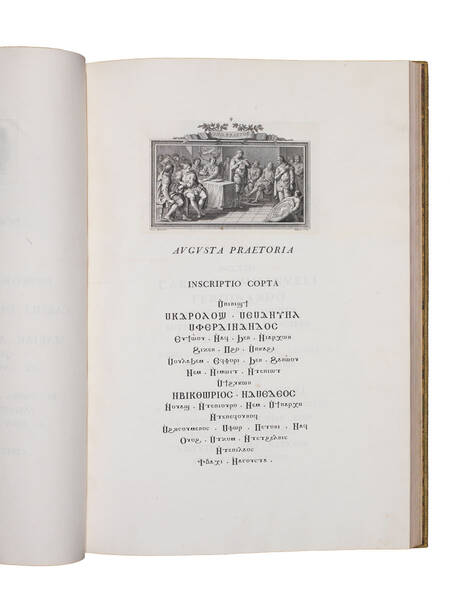
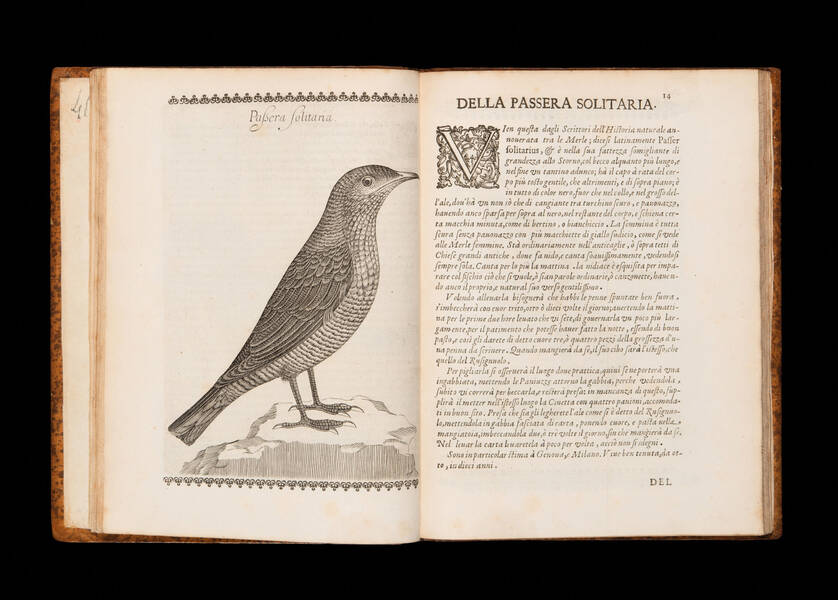
OLINA, Giovanni Pietro
Vccelliera ouero discorso della natura, e proprieta di diuersi vccelli, e in particolare di que' che cantano. Con il modo di prendergli, conoscergli,...
€ 6.000
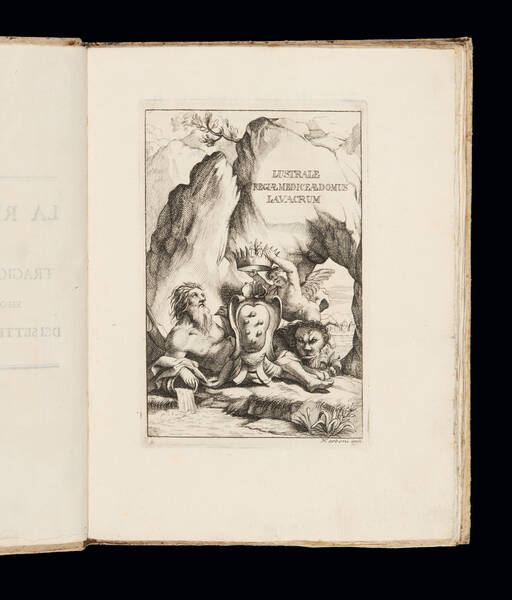
CATANI, Francesco Saverino
La reale medicide, esponente nella morte di Don Garzia i fatti più speciali di Cosimo Duca II. di Firenze ... Tragica festa teatrale, illustrata di...
€ 3.000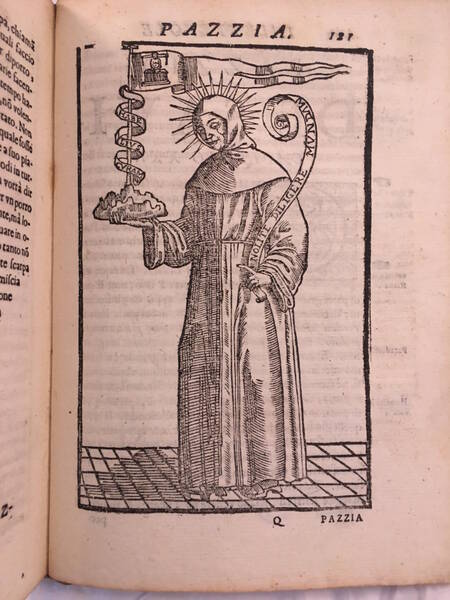
MEDA RIQUIER rare books ltd.
4 Bury Street St James's
SW1Y 6AB London
Phone +44 (0) 7770457377
info@medariquier.com