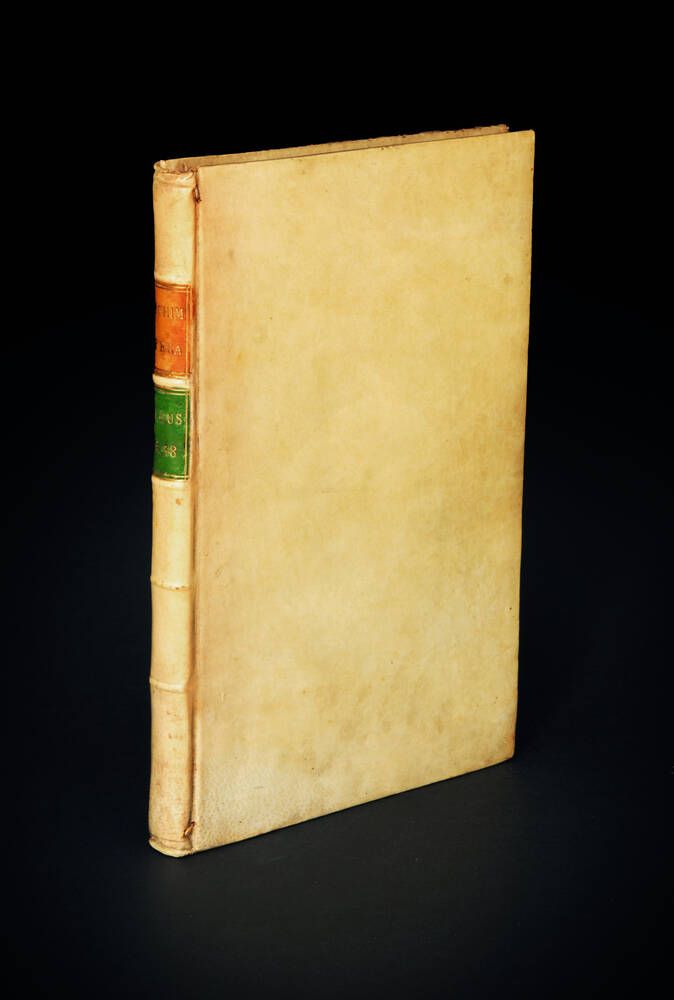
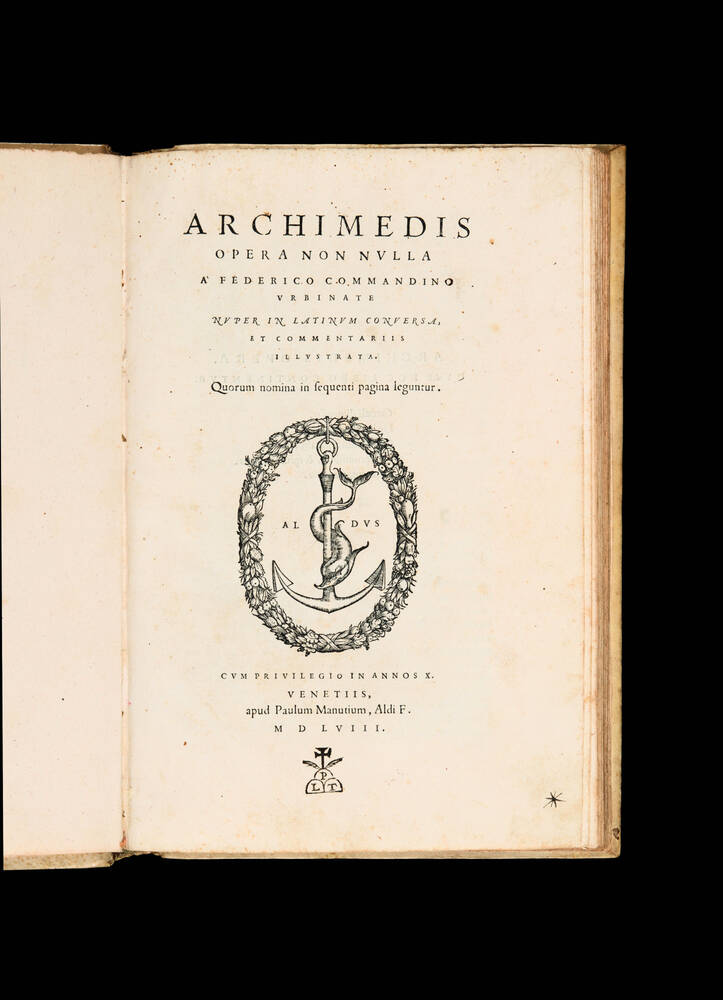
ARCHIMEDES. Archimedis opera non nulla à Federico Commandino urbinate nuper in latinum conversa, et commentariis illustrata.
Venice, apud Paulum Manutium Aldi f.., 1558.Folio (300×203mm), 2 parts in one volume with separate titles. I: [4], 55, [1] leaves; II: [1], 63, [1] leaves. Printer's device on title-page and last leaf of both parts. Numerous diagrams in text. Light marginal spotting, a manuscript monogram on title-page, overall a very fine copy in XVIII century stiff vellum, spine in compartments with two morocco lettering pieces, title lettered in manuscript on lower edge.
First edition of Federico Commandino's translation of Archimedes. This edition not only marked a pivotal moment in the rediscovery of Archimedes, whose writings were almost entirely forgotten during the Middle Ages, but also contributed to the development of mathematical studies in the XVI and XVII centuries, directly influencing Galileo and Kepler. Federico Commandino (1509–1575) studied Latin and Greek in Urbino, then moved to Padua in 1534 to study philosophy, medicine and mathematics. In the 1550s, he came under the patronage of the young Cardinal Ranuccio Farnese, who appointed him as court physician and mathematician. While in Rome with Cardinal Farnese, Commandino met Cardinal Marcello Cervini, the head librarian of the Vatican Library and future Pope Marcellus II. Cervini had a keen interest in Greek mathematics and had already conceived the idea of printing important Greek and Latin mathematical writings based on the manuscripts of the Vatican Library and other Italian libraries. Thanks to Farnese's encouragement and Cervini's requests, Commandino could devote the rest of his life to his greatest passion: restoring and producing Latin editions of classical Greek mathematical texts. In this role, Commandino had access to important manuscripts in Italian libraries and was in contact with the most prominent humanists of his time. The most notable works he edited and published were those of Archimedes, Ptolemy, Apollonius, Euclid and Pappus. "Archimedes, the greatest mathematician and engineer of antiquity, studied at Alexandria and lived most of his life at Syracuse. He was killed at the capture of Syracuse by the Romans under Marcellus in 212 by a Roman soldier whom he rebuked for trampling on a diagram he had drawn in the sand. [He] was above all a great mathematician, developing further many ideas of Eudoxus and Euclid. […] Archimedes — together with Newton and Gauss — is generally regarded as one of the greatest mathematicians the world has ever known, and if his influence had not been overshadowed at first by Aristotle, Euclid and Plato, the progress to modern mathematics might have been much faster. As it was, his influence began to take full effect only after the publication of [the] first printed edition which enabled Descartes, Galileo and Newton in particular to build on what he had begun" (PMM). Although the first appearance of any of Archimedes's works in print dates back only to 1503, the editio princeps of the Greek texts of seven of his works was not published until 1544 by Thomas Gechauff Venatorius, in Basel. However, Commandino found this edition entirely unsatisfactory: despite the translation, commentary and diagrams, many of the Archimedean demonstrations still remained obscure. Commandino's main motivations for translating Archimedes's books again from scratch were his desire to fully understand the mathematics they conveyed, and his wish to provide commentary that would clarify points less clear in the Basel edition. He began working on this new translation when, during a visit to Venice in 1553, he borrowed a Greek manuscript containing the writings of Archimedes with Eutocius's commentary from the Biblioteca Marciana. This manuscript was itself a copy of an older one dating back to the IX or X century, and it originally came from Cardinal Bessarion's library. In 1558, his new edition of five Archimedean writings was printed in Venice, containing five treatises: De Circuli dimensio, De lineis spiralibus, Quadratura paraboles, De conoidibus et sphaeroidibus, De numero arenae. These are followed, in the second part of the volume, by Commandino's commentary. Commandino's Archimedis opera non nulla is a significant achievement of mathematical humanism for its mathematical commentary and philological explanations, and served as an invaluable reference both for the subsequent editions of Archimedes's works as well as for XVI- and XVII-century mathematicians. Galileo Galilei owned a copy as it was the only available guide to understanding De lineis spiralibus, from which he drew inspiration for his observations on uniform motion published in Discorsi e dimostrazioni matematiche intorno a due nuove scienze (1638). In his Astronomia nova (1609), Johannes Kepler used Commandino's commentary on De conoidibus et sphaeroidibus to demonstrate the elliptical orbit of Mars. Kepler also explicitly referenced this edition in Ad Vitellionem Paralipomena (1604), quoting Commandino's commentary on De numero arenae. These references testify to the importance of Commandino's Archimedis for the rebirth of mathematical studies in Italy and abroad.
BMSTC Italian, p. 36; Brunet I, 384–85: "Edition peu commune"; EDIT16 CNCE 2318; Renouard 173, 3; Riccardi I, 41, 4: "Al pregio dei commenti del Commandino si aggiunge quello di bella edizione, ed assai poco comune" & 360, 2; Ciocci, Argante. Federico Commandino: Umanesimo matematico e rivoluzione scientifica. Urbino: Urbino University Press, 2023.
Other Books
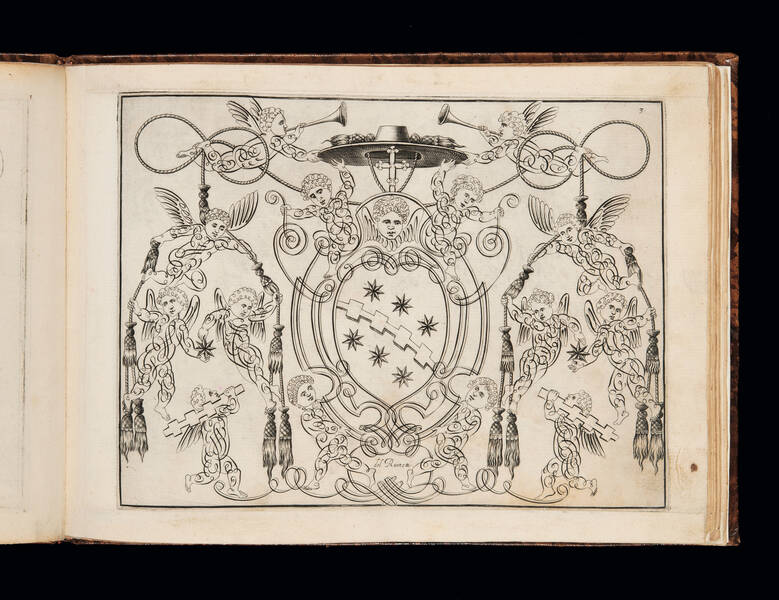
RUINETTI, Tomaso
Idea del buon scrittore, opera prima di Tomaso Ruinetti da Ravena a’beneficio de’desiderosi d’imitare le vere forme dello scrivere.
€ 8.000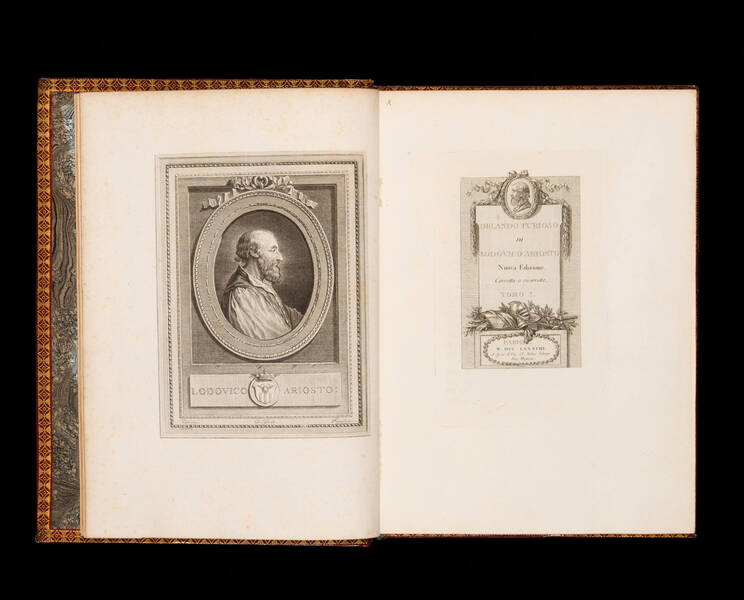
ARIOSTO, Ludovico
Orlando furioso di Ludovico Ariosto. Nuova Edizione Corretta e ricorretta.
€ 6.000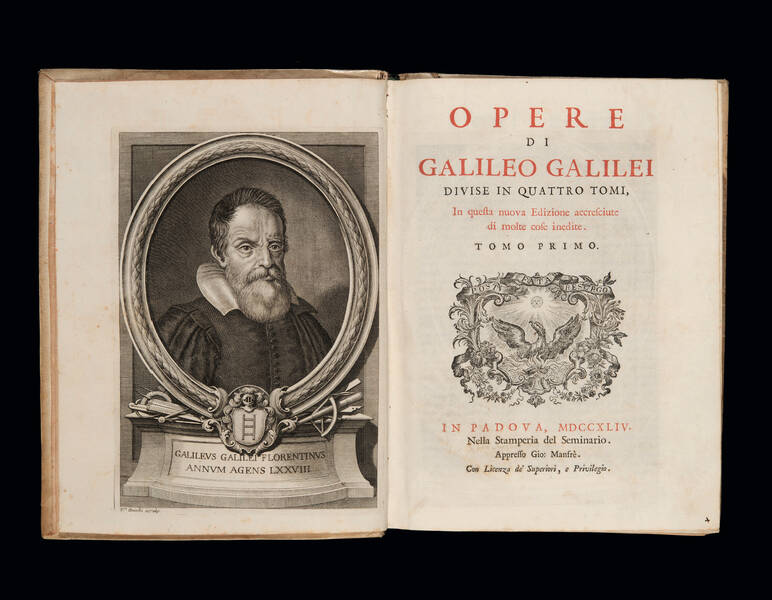
GALILEI, Galileo
Opere, divise in quattro tomi, in questa nuova edizione accresciute de molti cose inedite.
SOLD OUT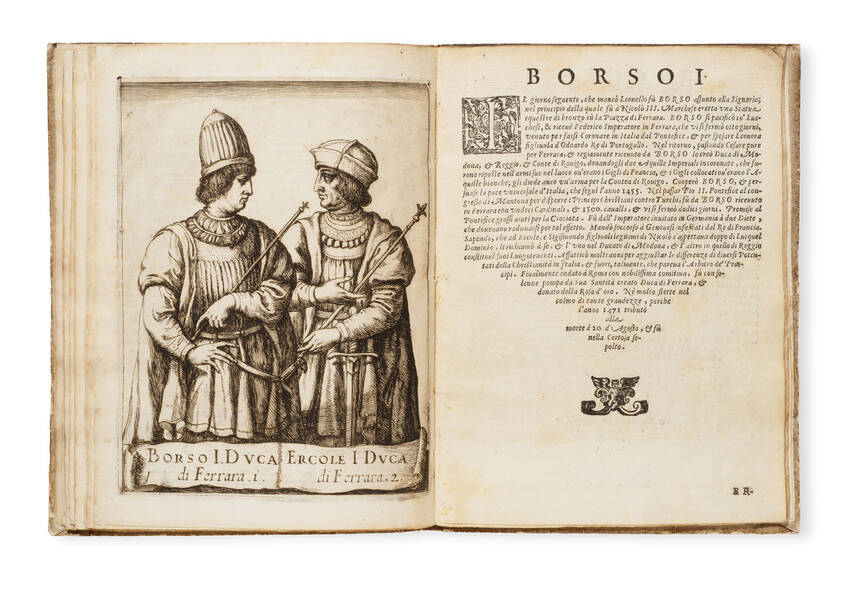
CARIOLA, Antonio; DOINO, Caterino
Ritratti de ser.mi Principi D’Este sig.ri di Ferrara con l’aggionta de loro fatti più memorabili ridotti in sommario.
SOLD OUT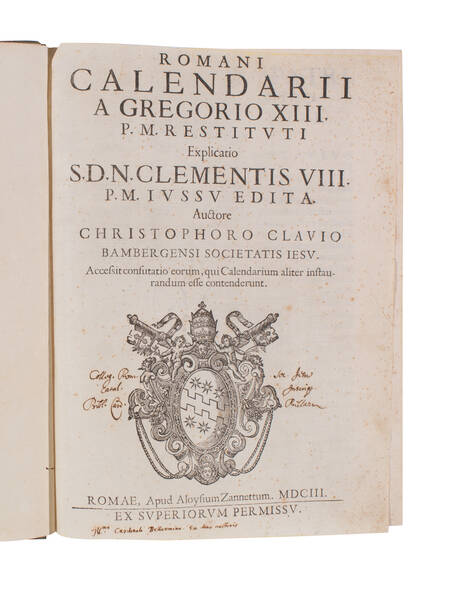
CLAVIUS, Christoph
Romani calendarii a Gregorio XIII. P.M. restituti Explicatio S.D.N. Clementis VIII. P.M. iussu edita.
SOLD OUT![La prima [seconda] parte de ragionamenti. Commento di ser Agresto da Ficaruolo, sopra la prima ficata del padre Siceo. Con la diceria de nasi.](https://www.medariquier.com/typo3temp/pics/00eb26b1e7.jpg "La prima [seconda] parte de ragionamenti. Commento di ser Agresto da Ficaruolo, sopra la prima ficata del padre Siceo. Con la diceria de nasi.")
ARETINO, Pietro; CARO, Annibale
La prima [seconda] parte de ragionamenti. Commento di ser Agresto da Ficaruolo, sopra la prima ficata del padre Siceo. Con la diceria de nasi.
€ 3.000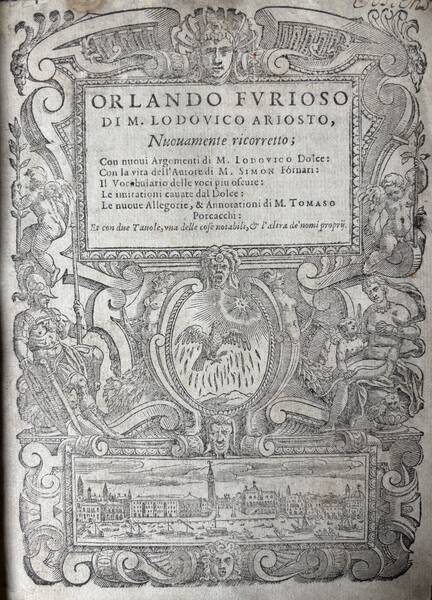
ARIOSTO, Ludovico
Orlando Furioso di M. Lodovico Ariosto, nuovamente ricorretto; con nuovi argomenti di M. Lodovico Dolce: con la vita dell'autore di M. Simon Fornari:...
€ 3.000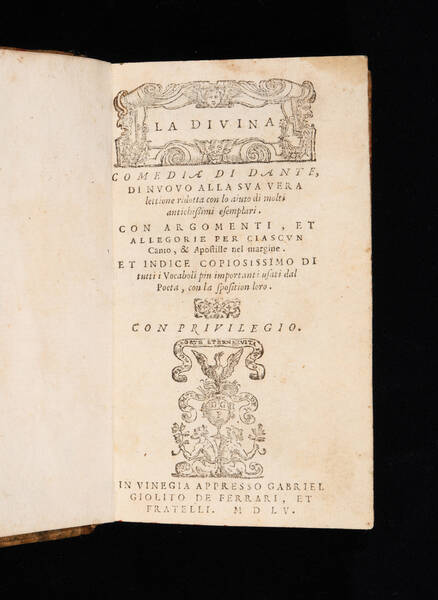
ALIGHIERI, DANTE
La Divina Comedia Di Dante, di nuouo alla sua vera lettione ridotta con lo aiuto di molti antichissimi esemplari. Con argomenti, et allegorie per...
SOLD OUT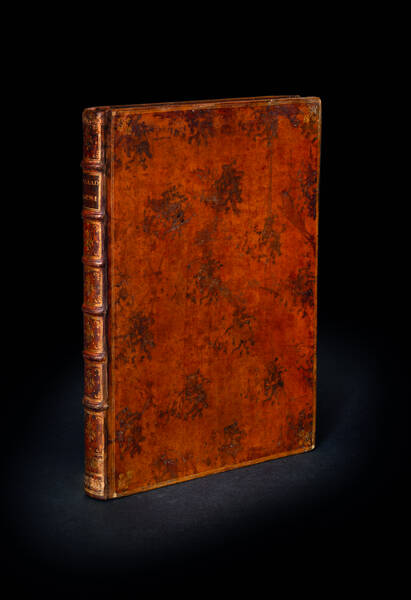
SPELTA, Antonio Maria
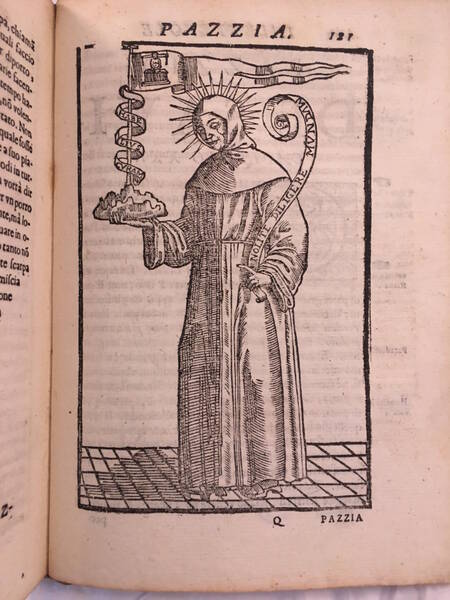
La saggia pazzia, fonte d’allegrezza, madre de’ piaceri, regina de’ belli humori.
€ 2.000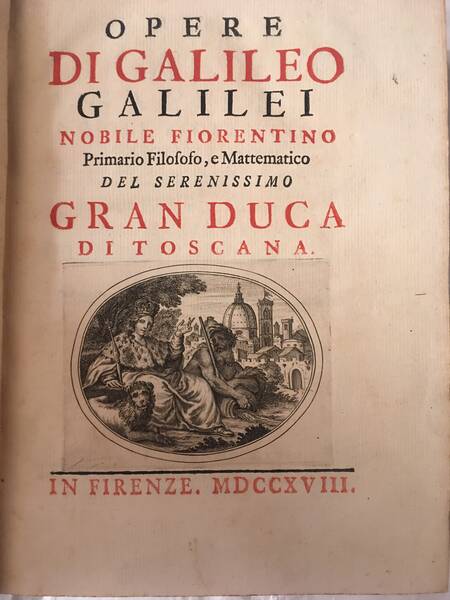
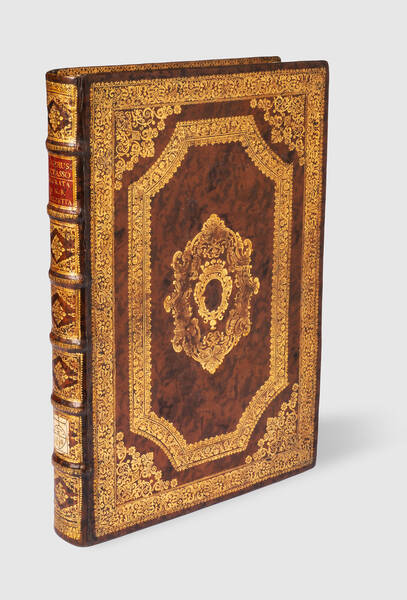
TASSO, Torquato
La Gerusalemme liberata di Torquato Tasso con le figure di Giambatista Piazzetta, alla Sacra Real Maestà di Maria Teresa d’Austria, regina...
€ 18.000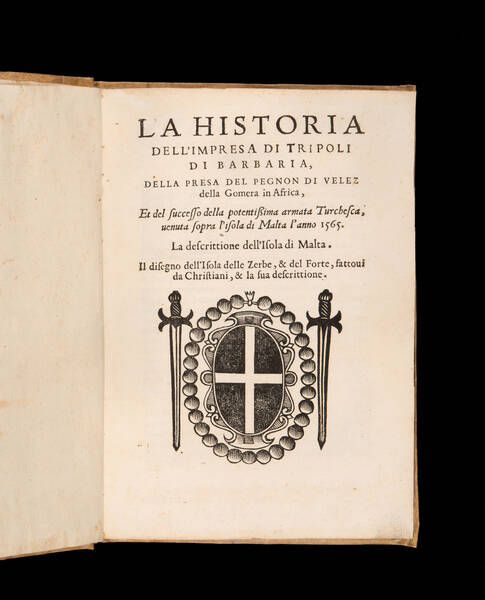
ULLOA, Alfonso de
La Historia dell'impresa di Tripoli di Barberia, della presa del Pegnon di Velez della Gomera in Africa, et del successo della potentissima armata...
€ 12.000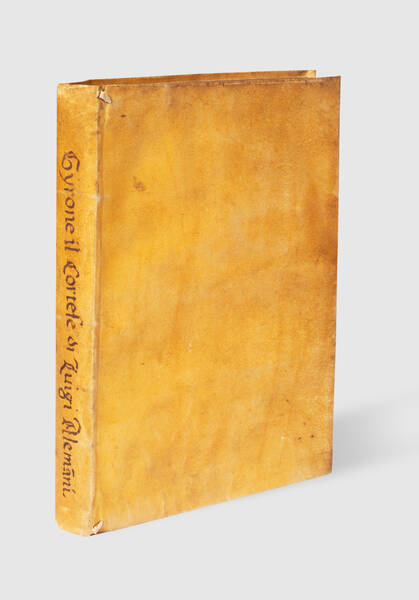
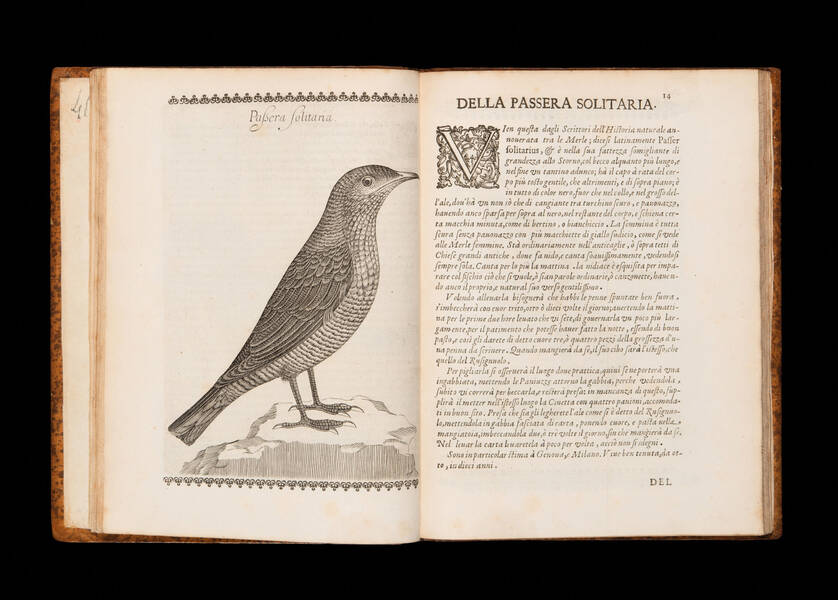
OLINA, Giovanni Pietro
Vccelliera ouero discorso della natura, e proprieta di diuersi vccelli, e in particolare di que' che cantano. Con il modo di prendergli, conoscergli,...
€ 6.000
MEDA RIQUIER rare books ltd.
4 Bury Street St James's
SW1Y 6AB London
Phone +44 (0) 7770457377
info@medariquier.com